


- Accepts Etsy gift cards
Vintage Magazine print
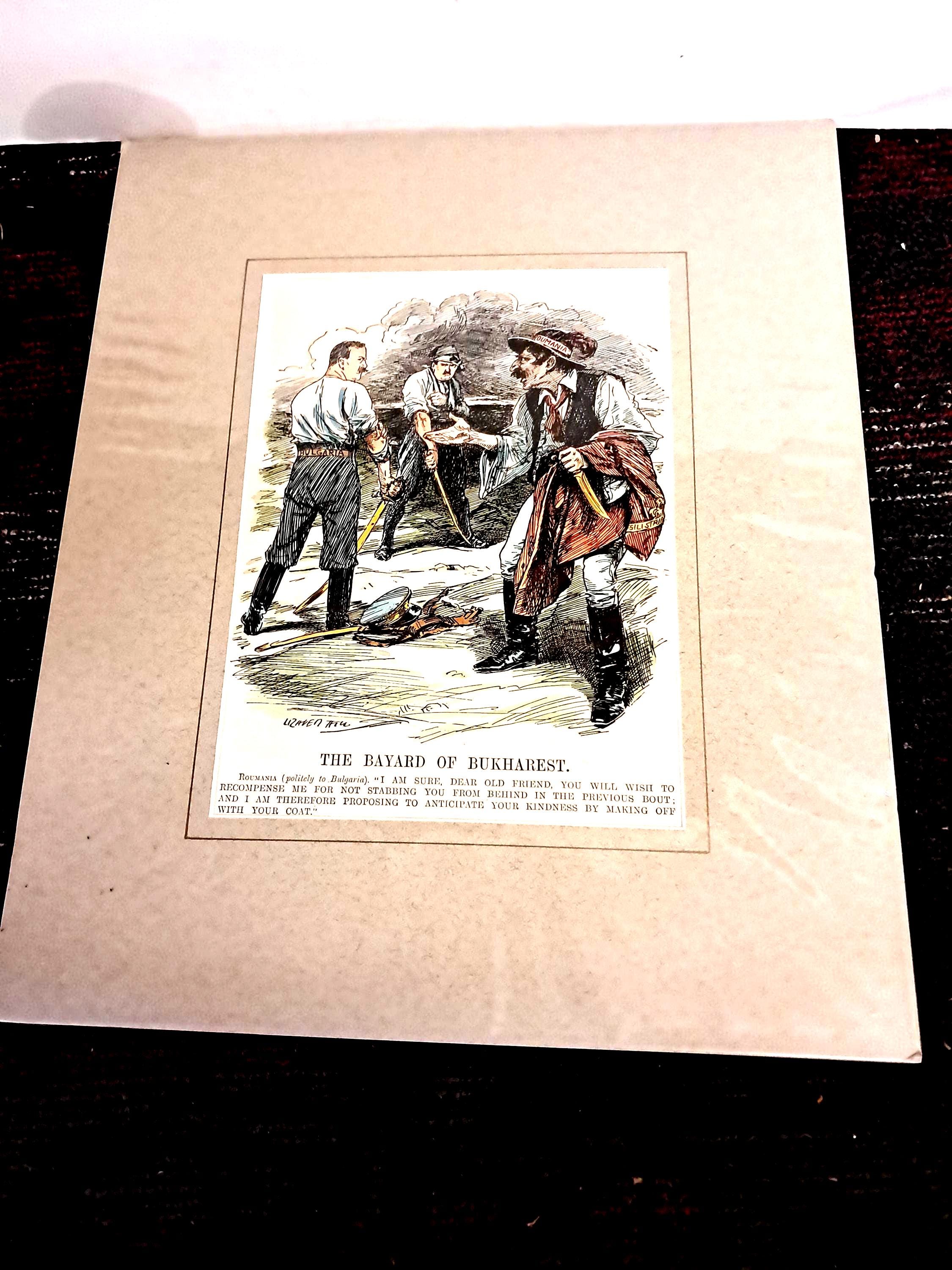
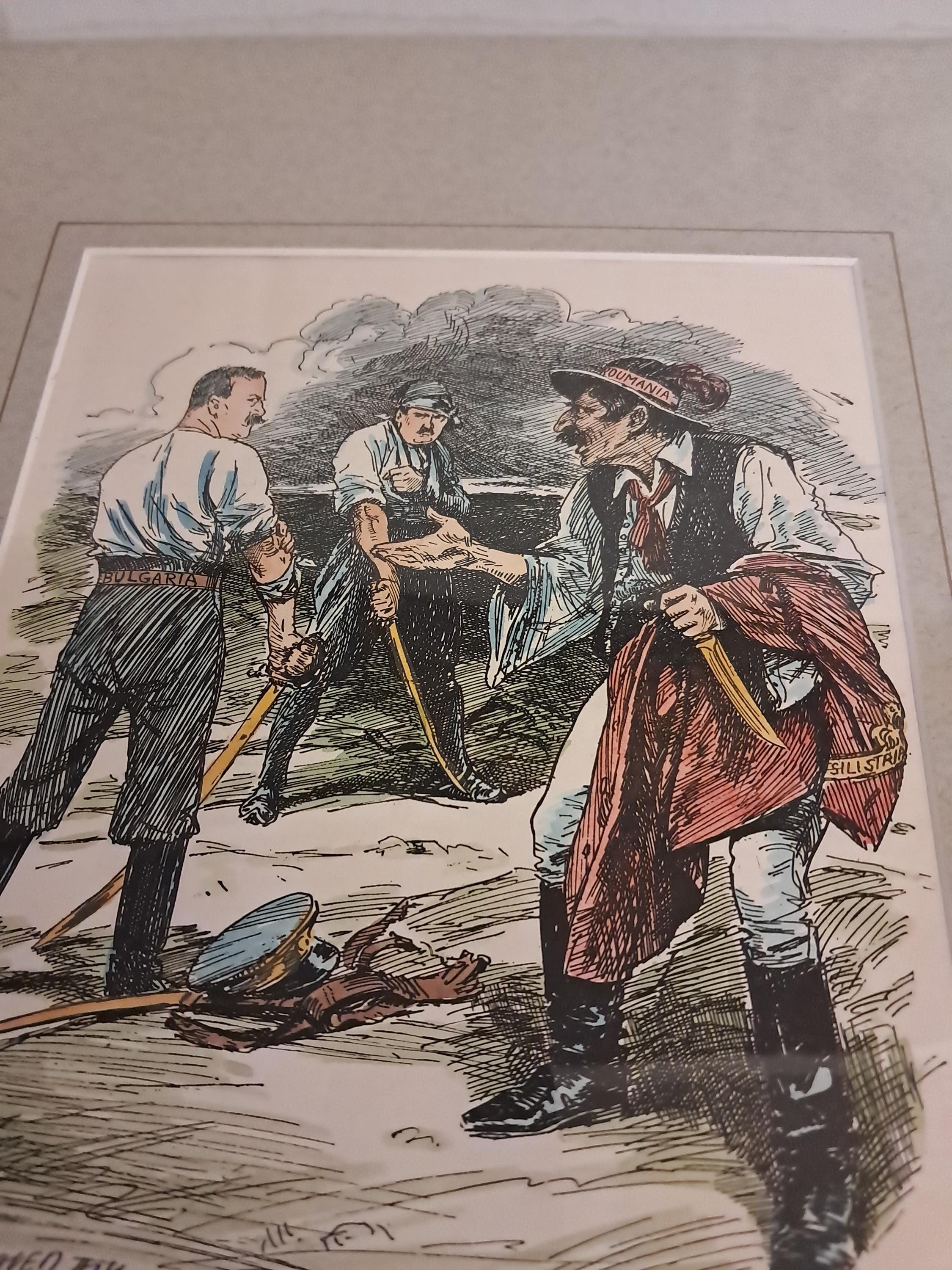
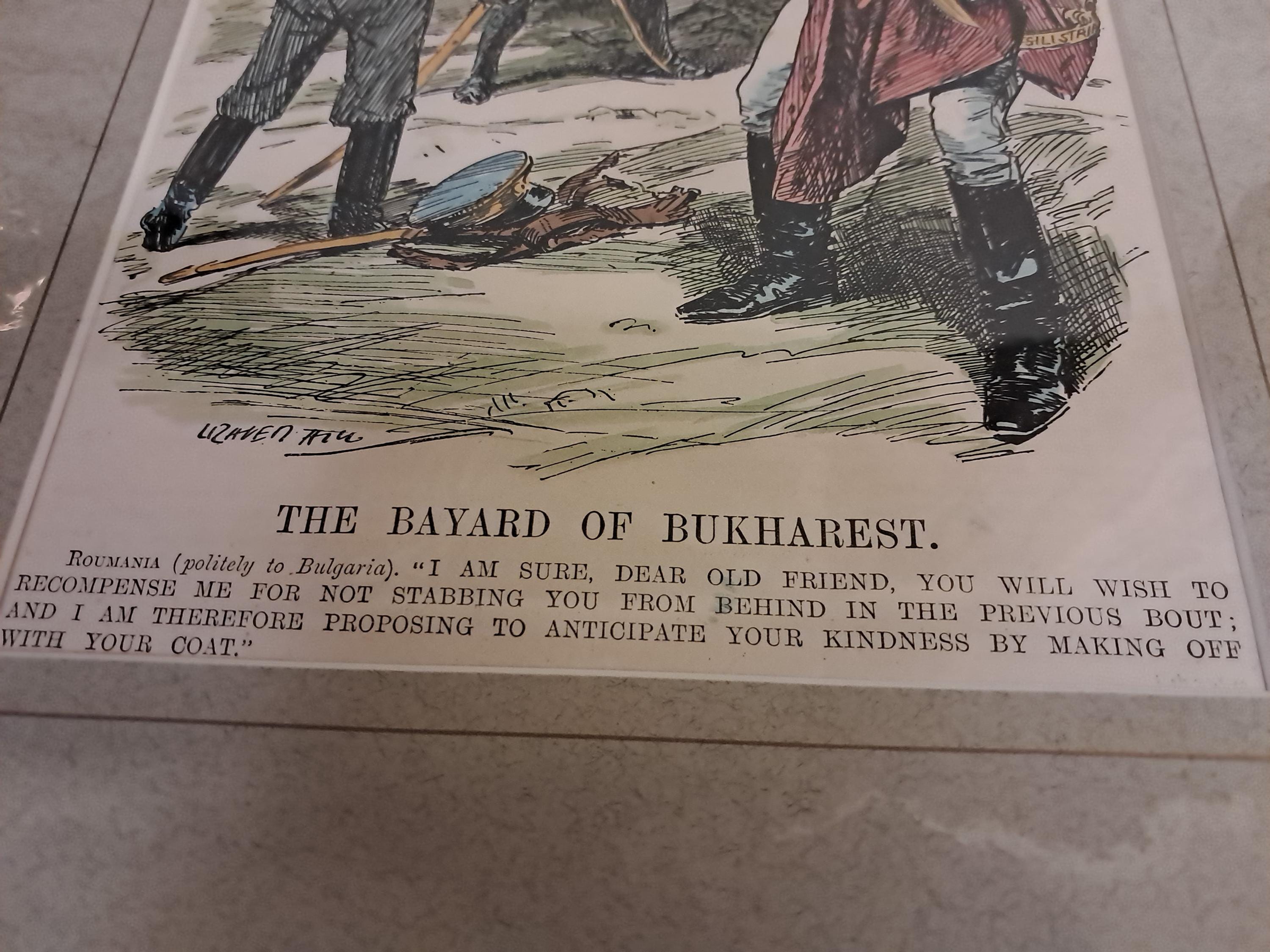
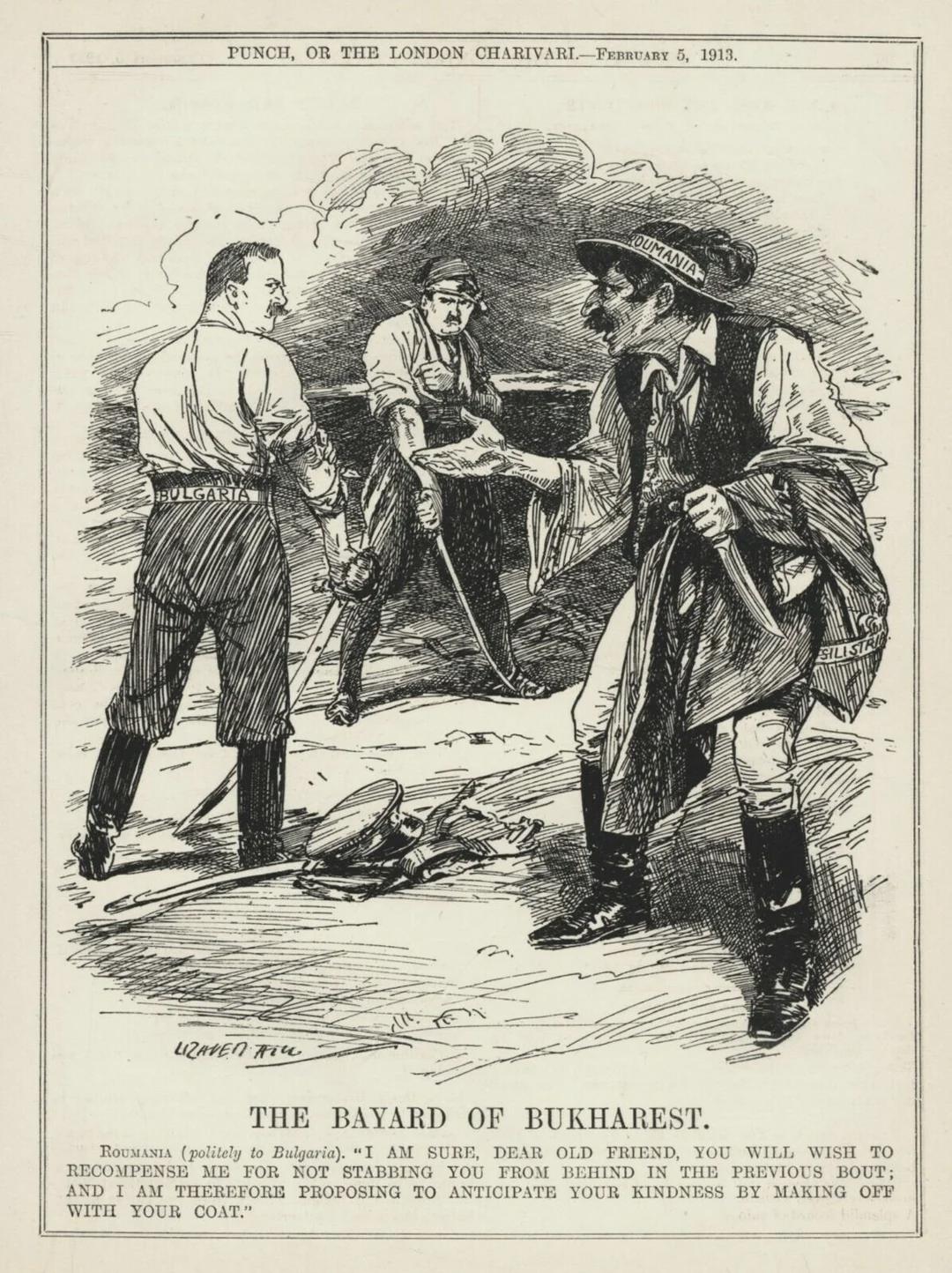
This satirical cartoon from Punch, or the London Charivari magazine, titled "The Bayard of Bukharest," depicts the political tensions in the Balkans in February 1913.It illustrates the relationship between Romania and Bulgaria during the Balkan Wars. The caricature was drawn by artist L. Raven-Hill. It highlights Romania's demands for territory from Bulgaria as compensation for not intervening in earlier conflicts
It is hard to escape the legacy of the Punch Magazine. From 1841 to 2002, the magazine cast a satirical eye on life in Britain. It charted the interests, concerns and frustrations of the country and today it stands as an invaluable resource not just as cartoon art and satire, but as primary source material for social historians.
THE BAYARD OF BUKHAREST: Romania (politely to Bulgaria) “I am sure, dear old friend, you will wish to recompense me for not stabbing you from behind in the previous bout; and I am therefore proposing to anticipate your kindness by making off with your coat.”
This illustration by L. Raven-hill, from PUNCH Magazine, February 5, 1913, during the Second Balkan War. Original from the magazine, not a modern reproduction. Full size: 8 x 10 1/2 inches, including borders. Condition: bright and clean, lays flat, backside is blank. May be framed.
--The Balkan Wars (Turkish: Balkan Savaslari, literally "the Balkan Wars" or Balkan Faciasi, meaning "the Balkan Tragedy") consisted of two conflicts that took place in the Balkan Peninsula in 1912 and 1913. Four Balkan states defeated the Ottoman Empire in the first war. The main victor of the four, Bulgaria, fought and pushed back all four original combatants of the first war along with halting a surprise attack from Romania from the north in the second war. The conflicts ended catastrophically for the Ottoman Empire, which lost the bulk of its territory in Europe. Austria-Hungary, although not a combatant, became relatively weaker as a much-enlarged Serbia pushed for union of the South Slavic peoples. The war set the stage for the Balkan crisis of 1914 and thus served as a "prelude to the First World War". By the early 20th century, Bulgaria, Greece, Montenegro and Serbia had achieved independence from the Ottoman Empire, but large elements of their ethnic populations remained under Ottoman rule. In 1912 these countries formed the Balkan League. The Ottoman Empire lost all its European territories to the west of the River Maritsa as a result of the two Balkan Wars, which thus delineated present-day Turkey's western border. A large influx of Turks started to flee into the Ottoman heartland from the lost lands. By 1914, the remaining core region of the Ottoman Empire had experienced a population increase of around 2.5 million because of the flood of immigration from the Balkans.Citizens of Turkey regard the Balkan Wars as a major disaster (Balkan harbi faciasi) in the nation's history. The unexpected fall and sudden relinquishing of Turkish-dominated European territories created a psycho-traumatic event amongst many Turks that triggered the ultimate collapse of the empire itself within five years. Nazim Pasha, Chief of Staff of the Ottoman Army, was held responsible for the failure and was assassinated on 23 January 1913 during the 1913 Ottoman coup d'état.
I have more Balkan War cartoons and hundreds of other hard-to-find original Punch cartoon illustrations for sale. Combine orders with no extra shipping fees.
Punch, a magazine of humor and satire, ran from 1841-2002. A very British institution renowned internationally for its wit and irreverence, it helped to coin the term "cartoon" in its modern sense as a humorous illustration.
In Color
Cardboard Framed
Great Condition
Framed size : 15.25 x 12
Image Size : 9.25 x 7