

- Accepts Etsy gift cards
$1,636.25 $1,925.00
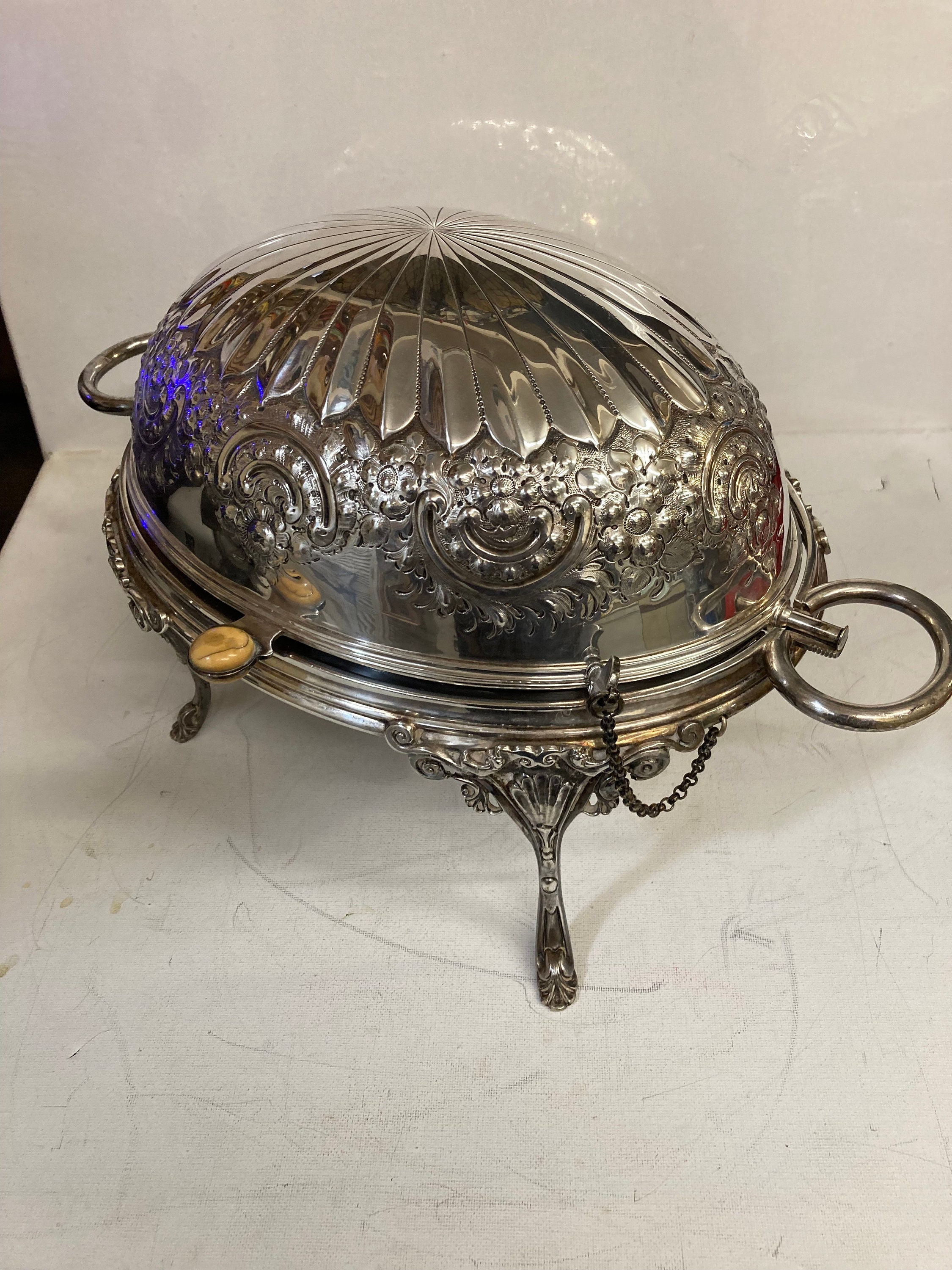
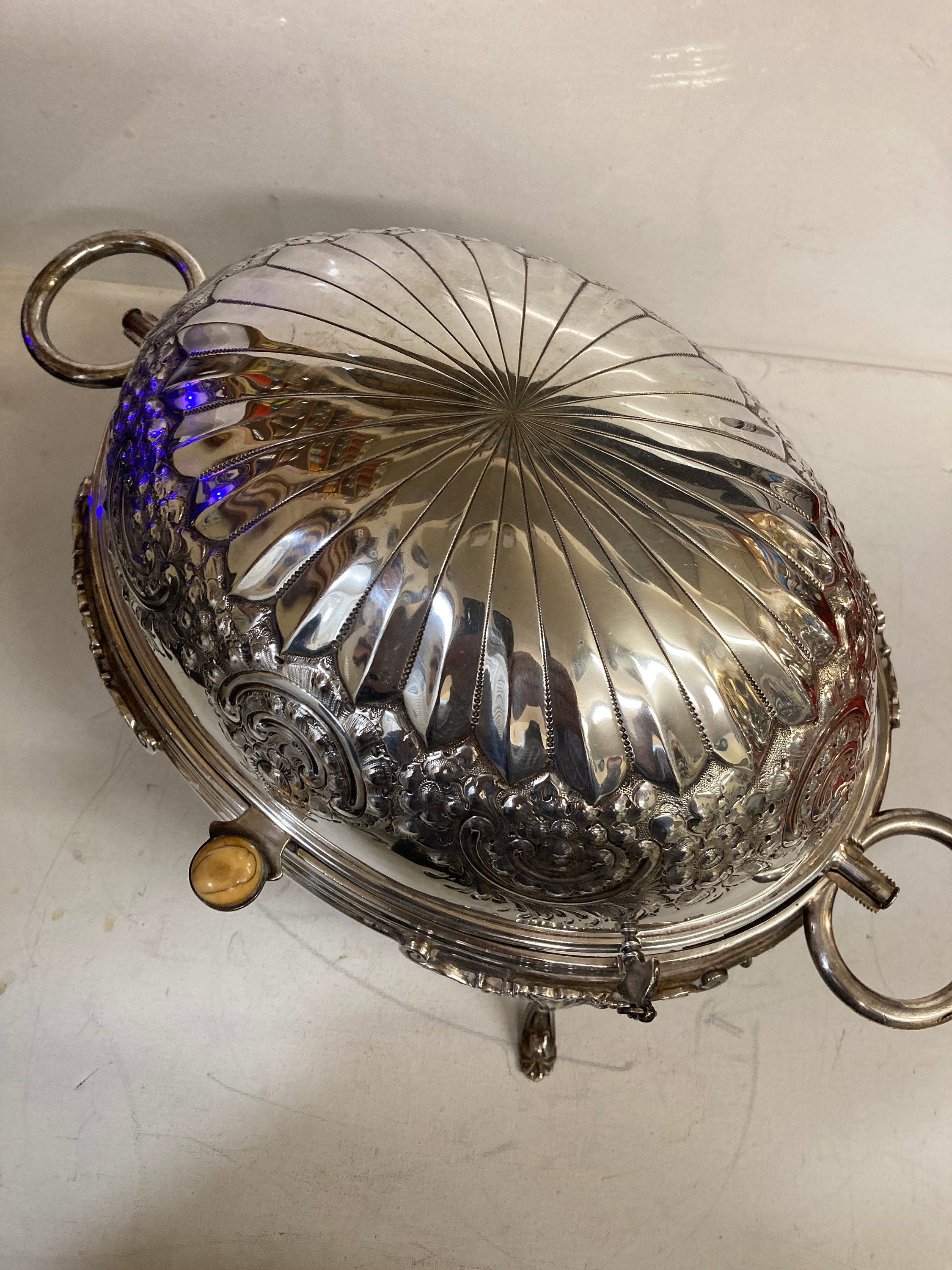
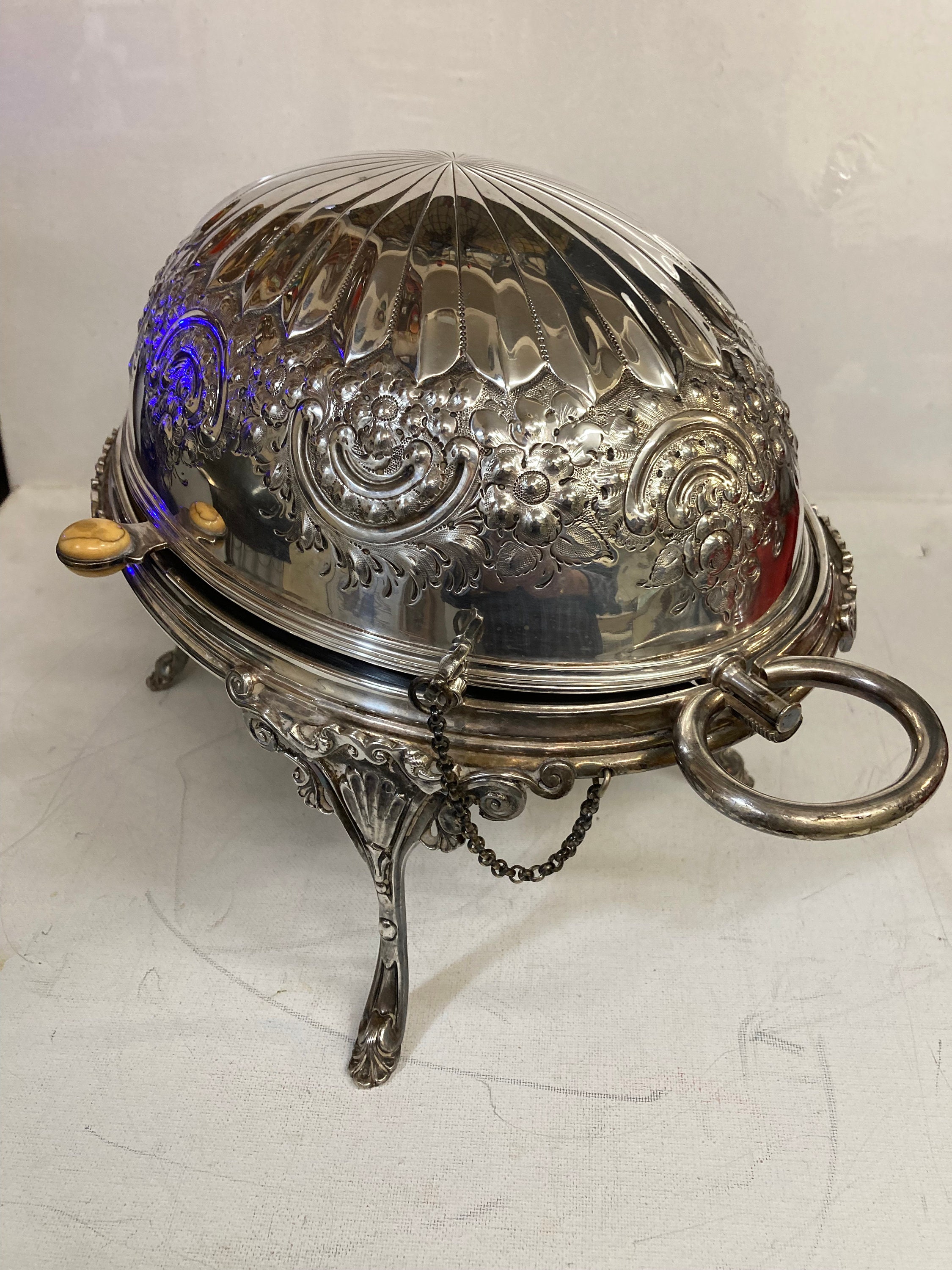
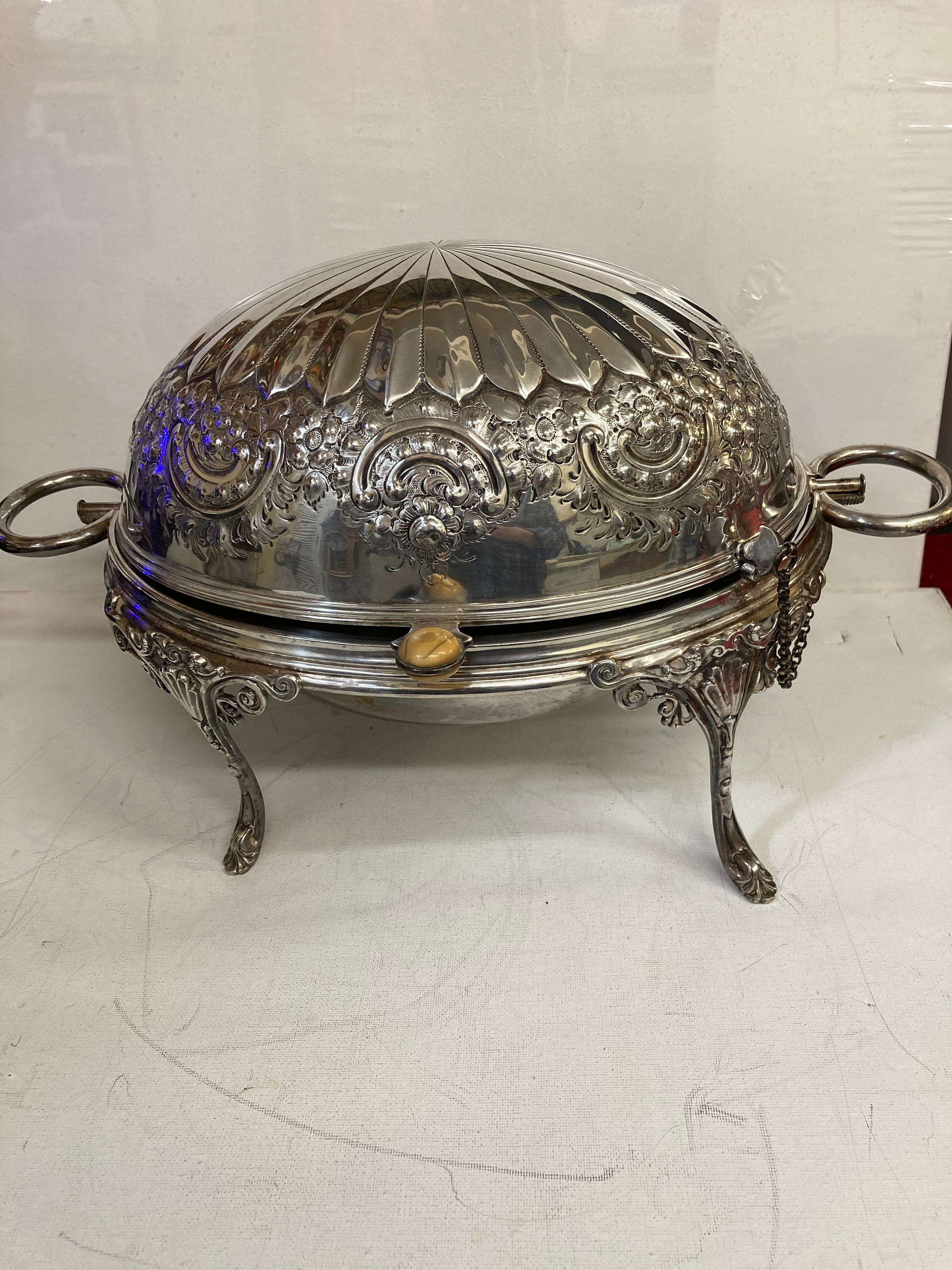
Late 19th Century Silver Plated Coverd Bowl on Stand by James Deakin & Sons.1870's
Rare Antique English Victorian (1870s) James Deakin & Sons Silver Plated.
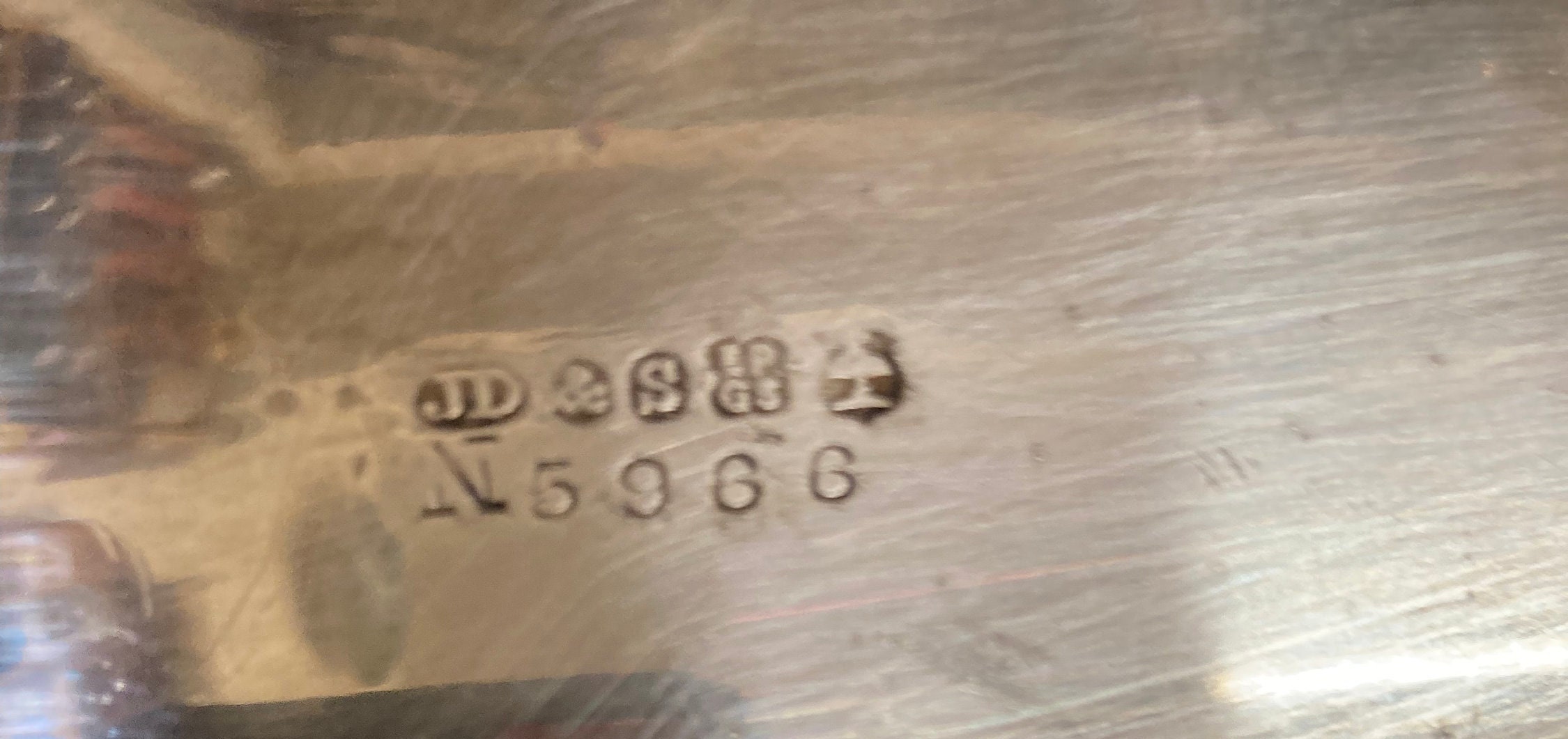
Superb ornate & elegant Electro Plated Nickel Silver (EPNS) teapot beautifully handcrafted by a master silversmith of the highest order and suitably hallmarked by James Deakin & Sons Silversmiths of repute in the Victorian era.
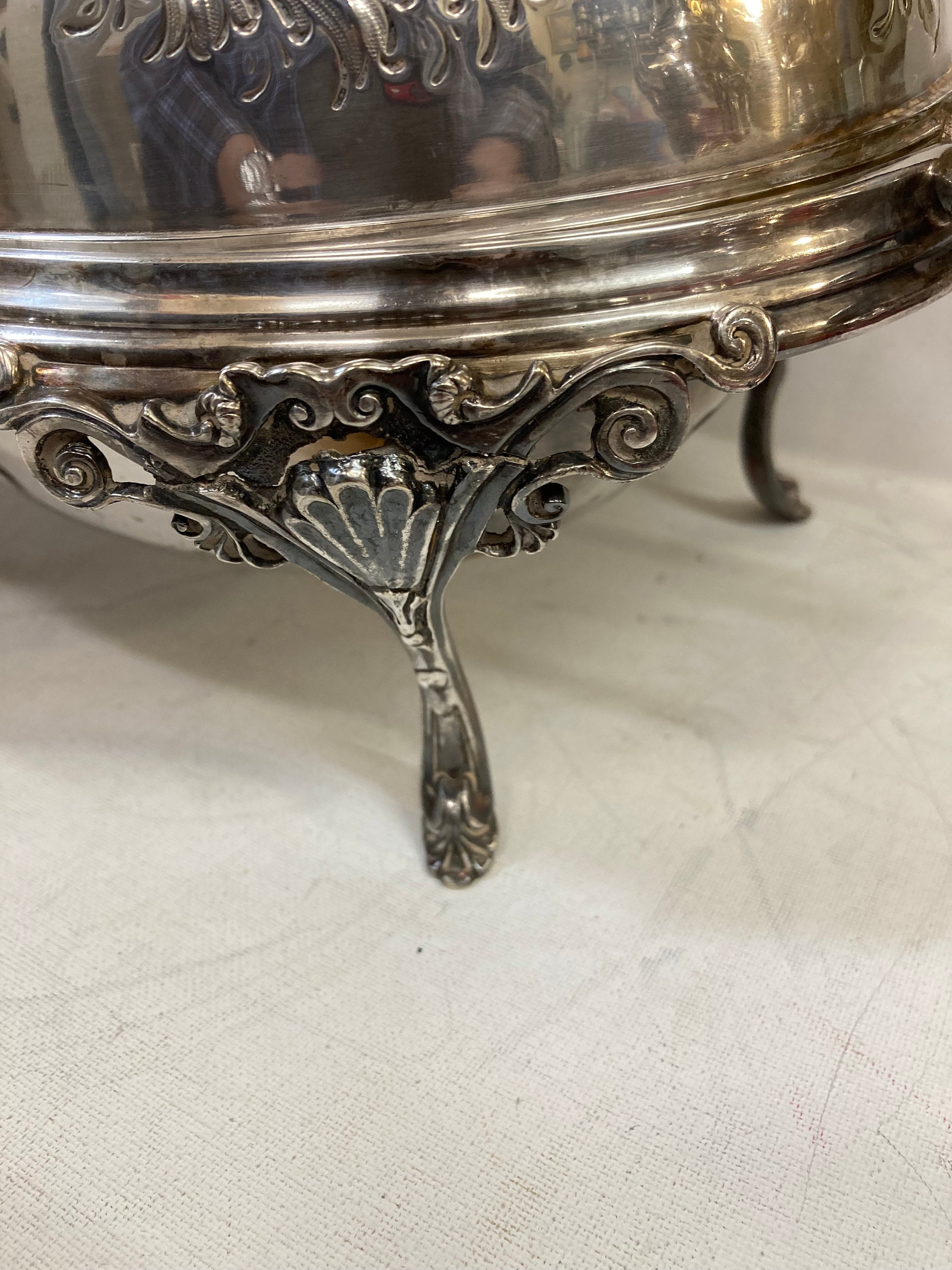
Marvellous weight and feel. Needs to be seen and handled to be fully appreciated. Please browse all of photographs for size, weight and condition as they are self explanatory.
In the history of the United Kingdom, the Victorian era was the period of Queen Victoria's reign, from 20 June 1837 until her death on 22 January 1901.
Silver plate or electroplate is formed when a thin layer of pure or sterling silver is deposited electrolytically on the surface of a base metal.
JAMES DEAKIN & SONS
Sheffield
The firm was established in 1865 by James Deakin at Sidney Works, Matilda Street, Sheffield. Before 1886 he was joined in partnership by his three sons, William Pitchford, John and Albert and the style of the firm was changed to James Deakin & Sons. In 1888 they opened London offices and showrooms at 48 Holborn Viaduct. Other branches were opened at Glasgow and Belfast. In 1897 the firm was converted to James Deakin & Sons Ltd.
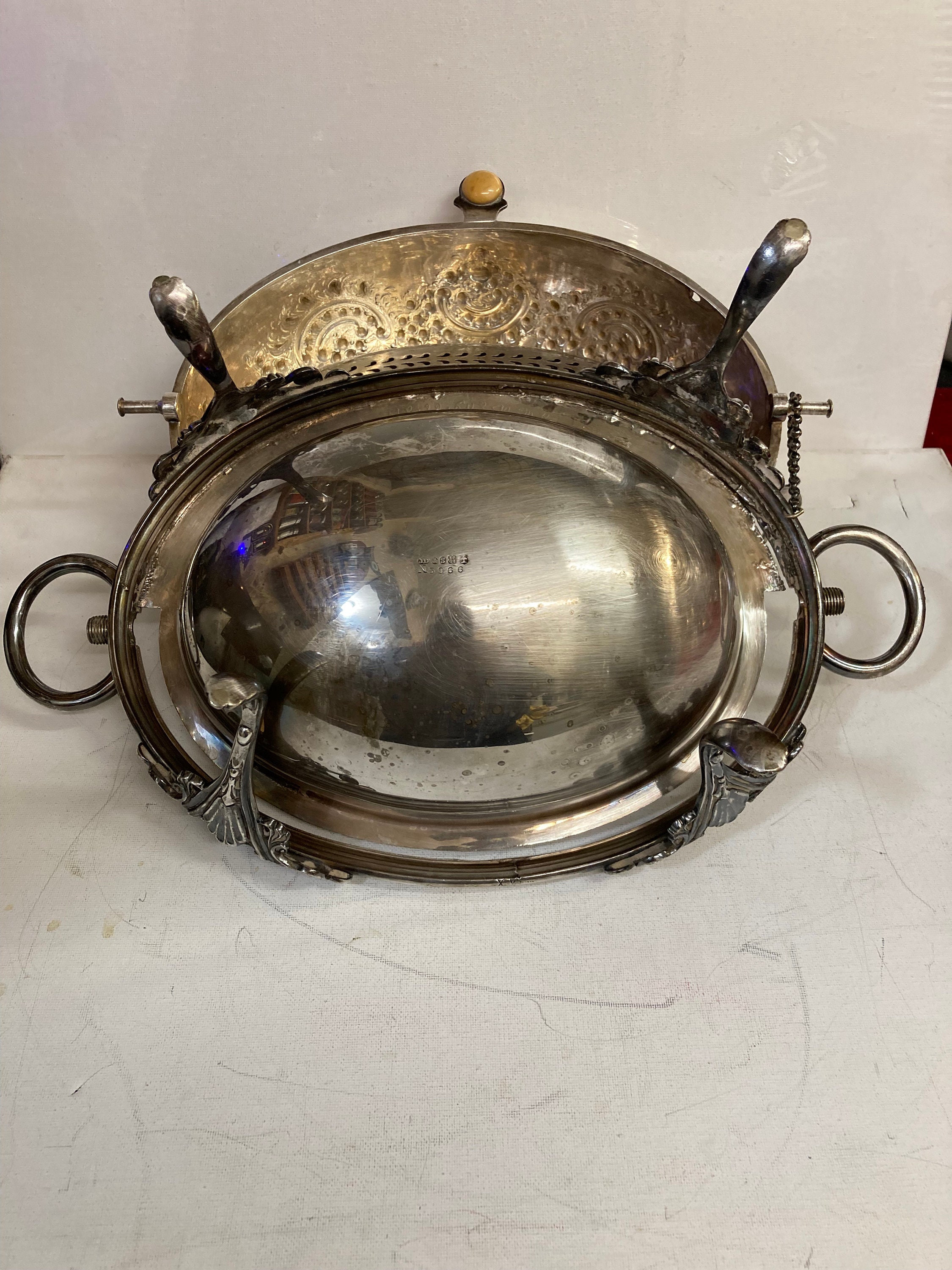
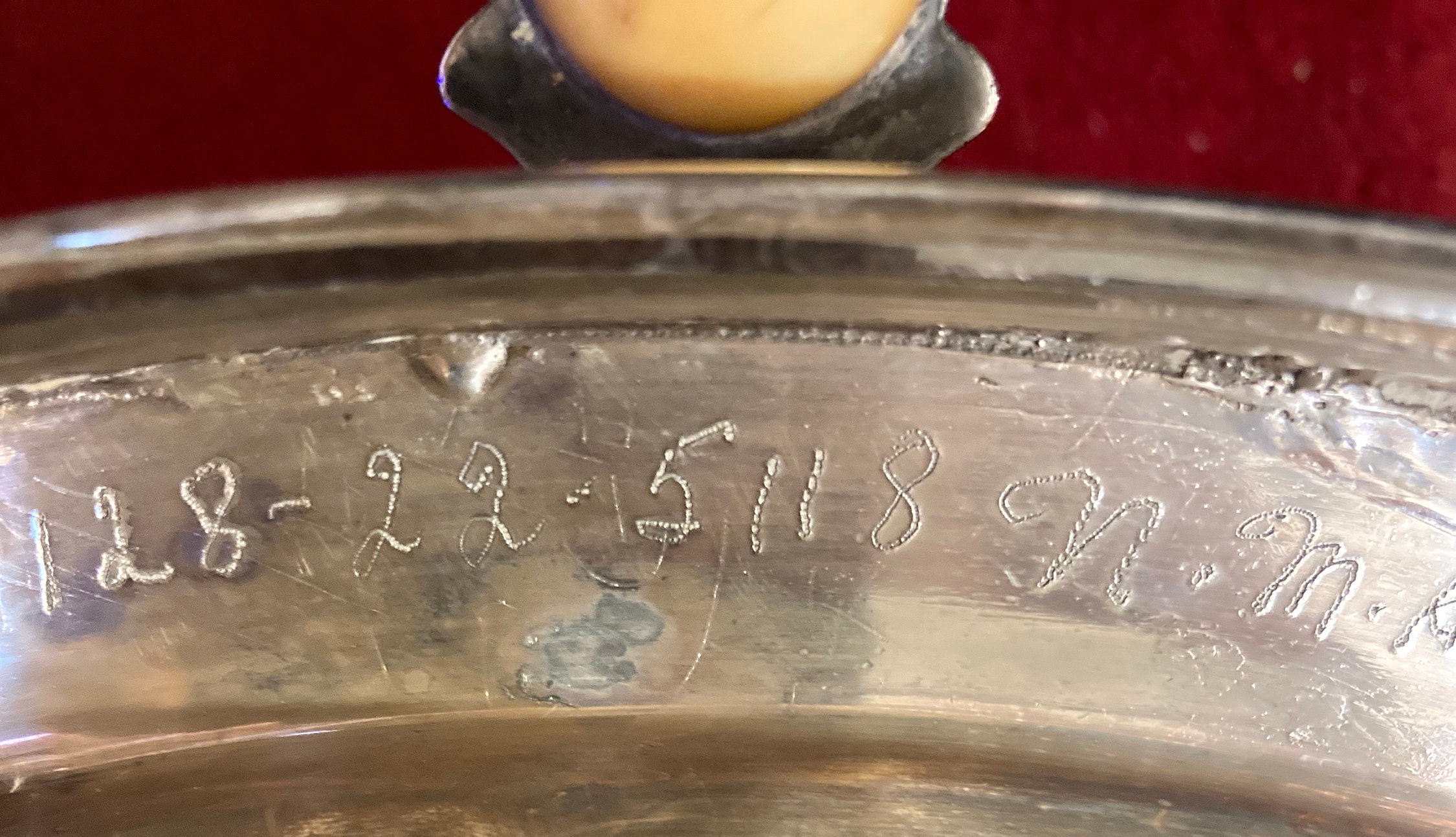
Hand Marked 128-22-511 8 n m h
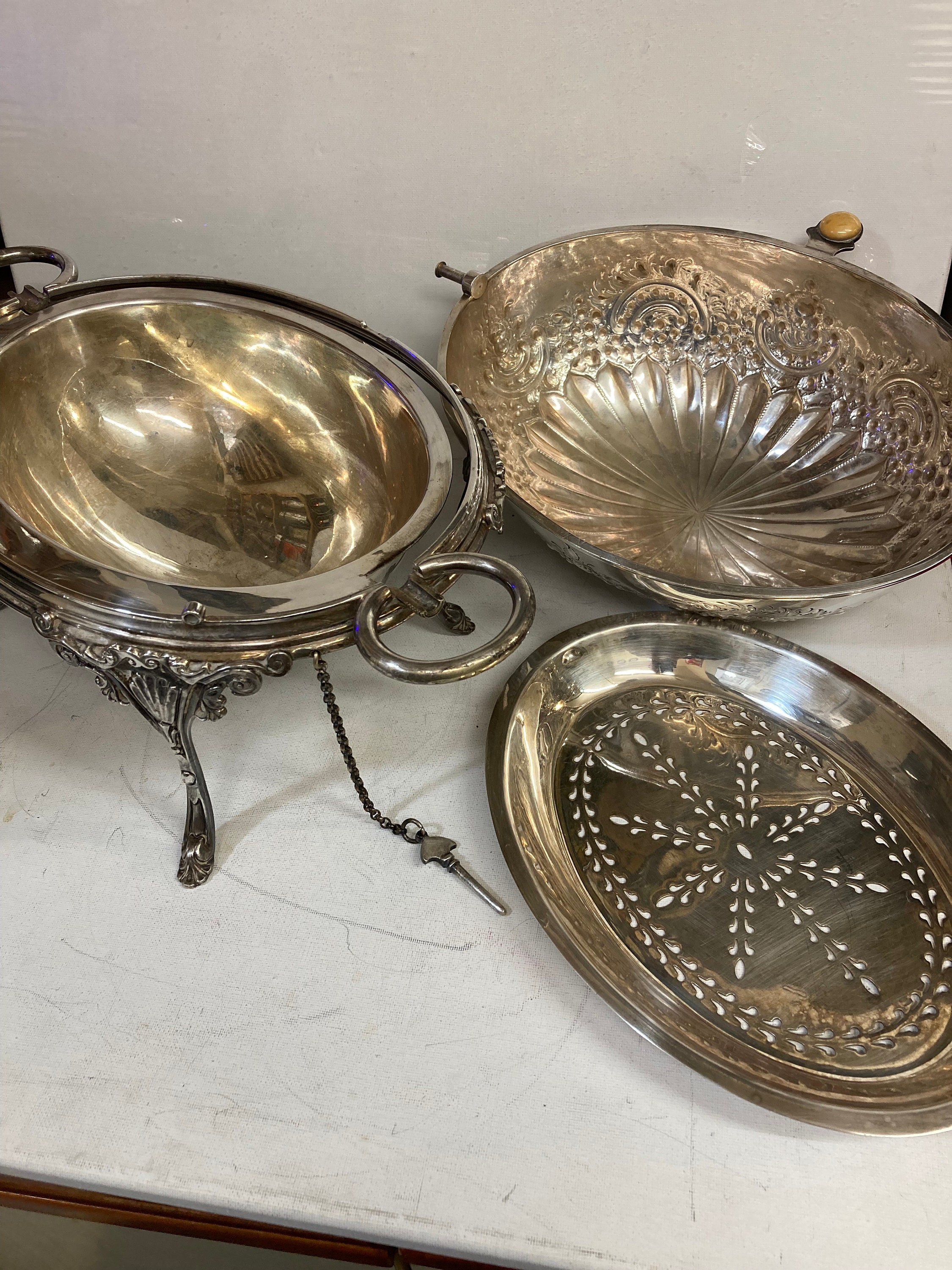
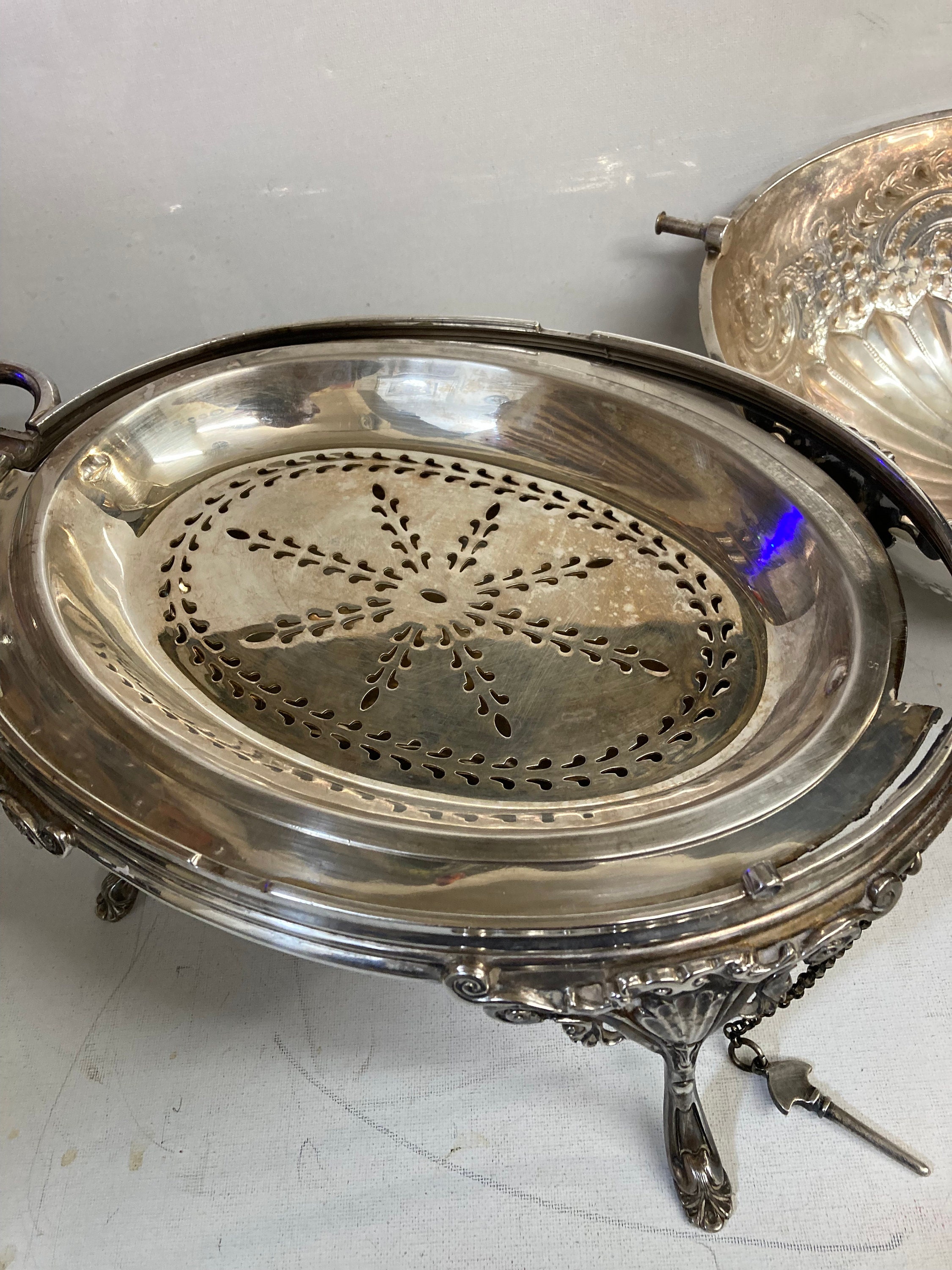
Consists of 3 sections
Bowl with Handles & Stand
Plate to Cover Bowl within
Cover With Lock
Weight: 4 3/4 lbs
15" Wide x 8 " Tall x 8 " Deep
Excellent condition without any damges or marks
History:
The firm was founded in Sheffield by James Deakin in 1866.
The first mark was entered by the firm in Sheffield Assay Office on 31 January 1878. It was a "JD" over "WD" and, possibly, represented the partnership of James Deakin and his son William Pitchford Deakin. The firm was active at Sidney Works, Matilda Street, Sheffield.
In 1886 two further sons entered in the partnership, John Deakin and Albert Deakin, and the firm was then known as James Deakin & Sons.
Further marks were entered in London Assay Office (1888) by William and John Deakin (subsidiary offices and showrooms at 48 Holborn Viaduct, London), Chester and Birmingham. Further offices and showrooms were opened at Gardiner House, 14 Charterhouse Street, London, 34 St. Enoch Square, Glasgow and 7 Queen Street, Belfast.
After the retirement of James Deakin (1893) the business was continued by his sons William, John and Albert.
In 1897 the firm was converted into a limited liability company under the style James Deakin & Sons Ltd.
The firm was the proprietor of Shaw and Fisher, Electro-plate Manufacturers (established 1835) and of Walter Latham & Son, Sterling Silver & Electro-plate manufacturers (established 1874).
In 1935, James Deakin & Sons Ltd was part of an ill-fated merger "Silver & Steelcrafts Ltd" that included Fenton Bros and J.H. Potter & Sons. The combine collapsed within three years.
In 1961 the brand was part of the "MONOGRAM" CUTLERY GROUP belonging to I.S. Dearden & Sons Ltd, manufacturing holloware and flatware under the "Bell brand" in the patterns 'Gordon', 'Balmoral' and 'Empire'.
To avoid any confusion with the production of another Sheffield manufacturer having the same initials JD&S (James Dixon & Sons) the firm used in its silverplate production a figural trade mark representing a 'desk bell' (often interpreted as a 'lamp'). Likewise, Dixon used a figural trade mark (registered in 1879) representing a 'bugle'.