

- Accepts Etsy gift cards
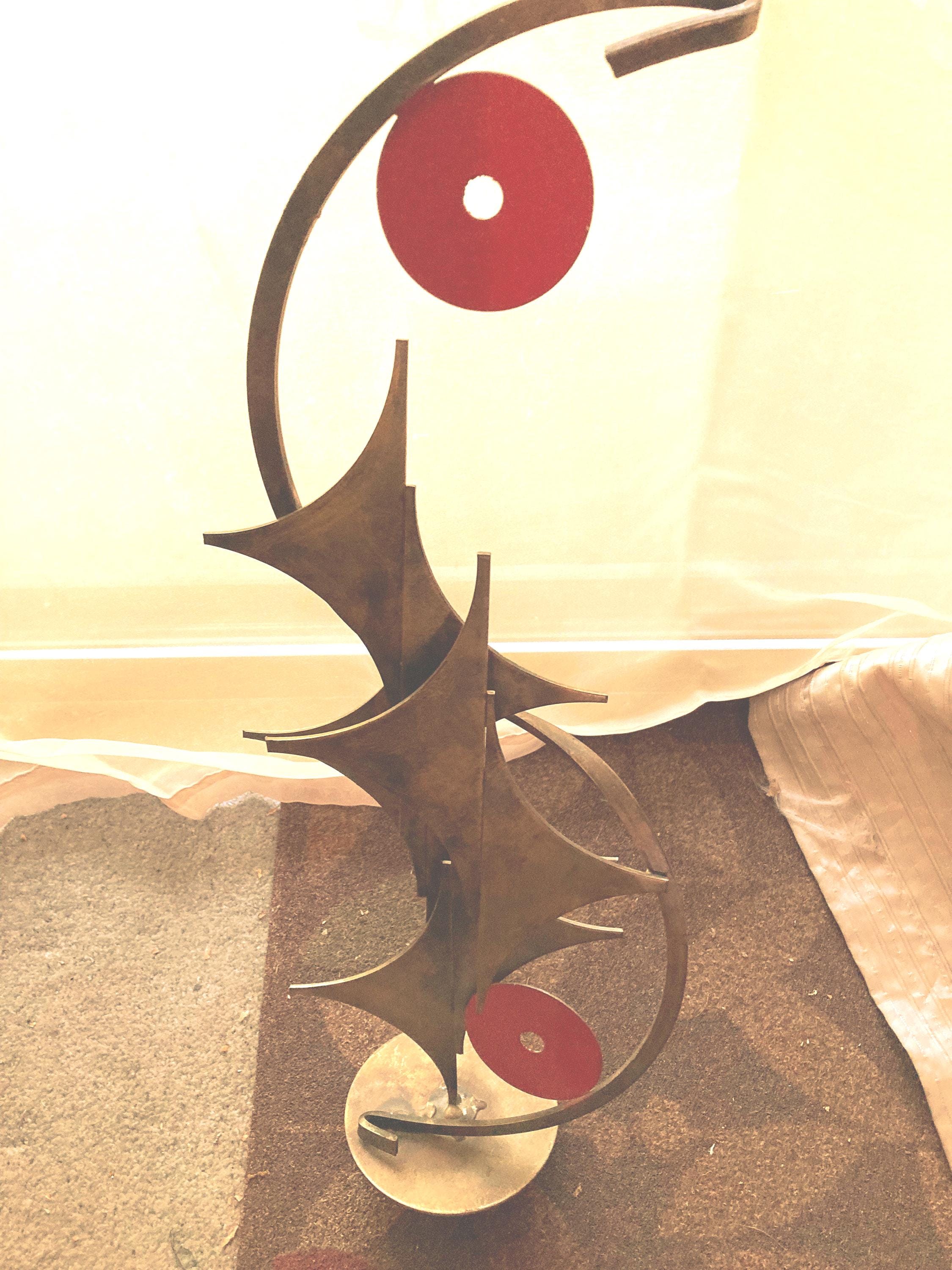
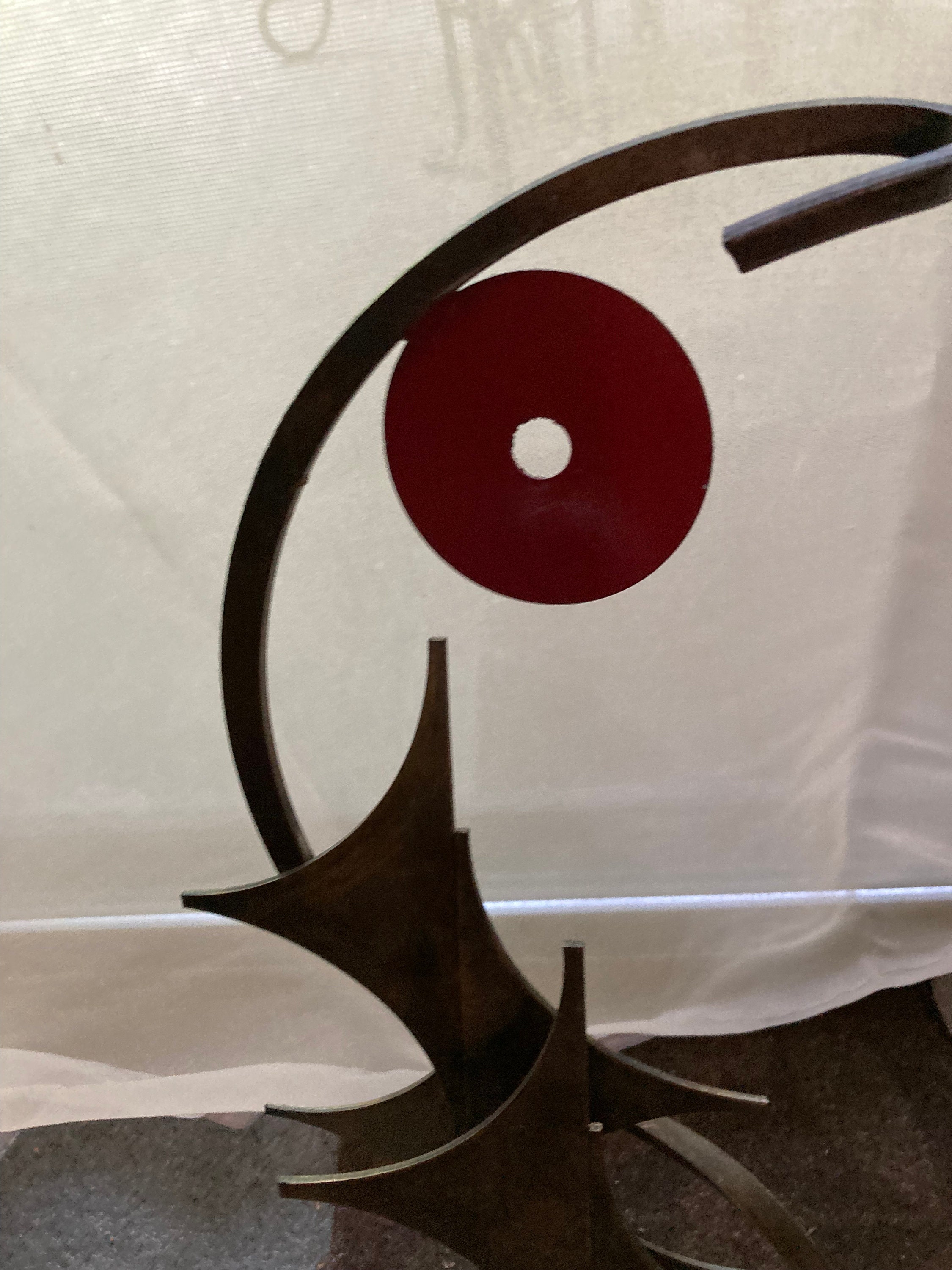
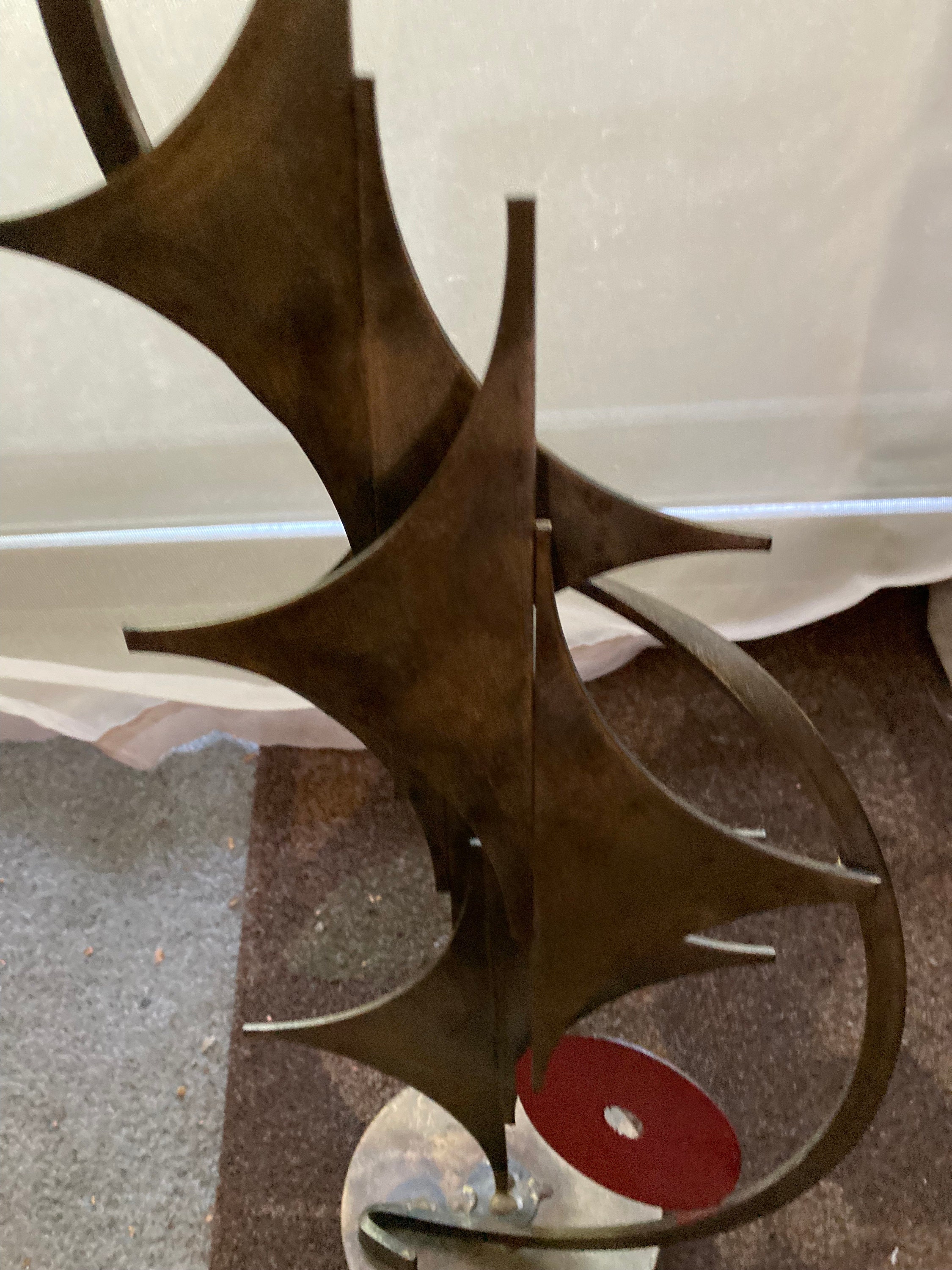
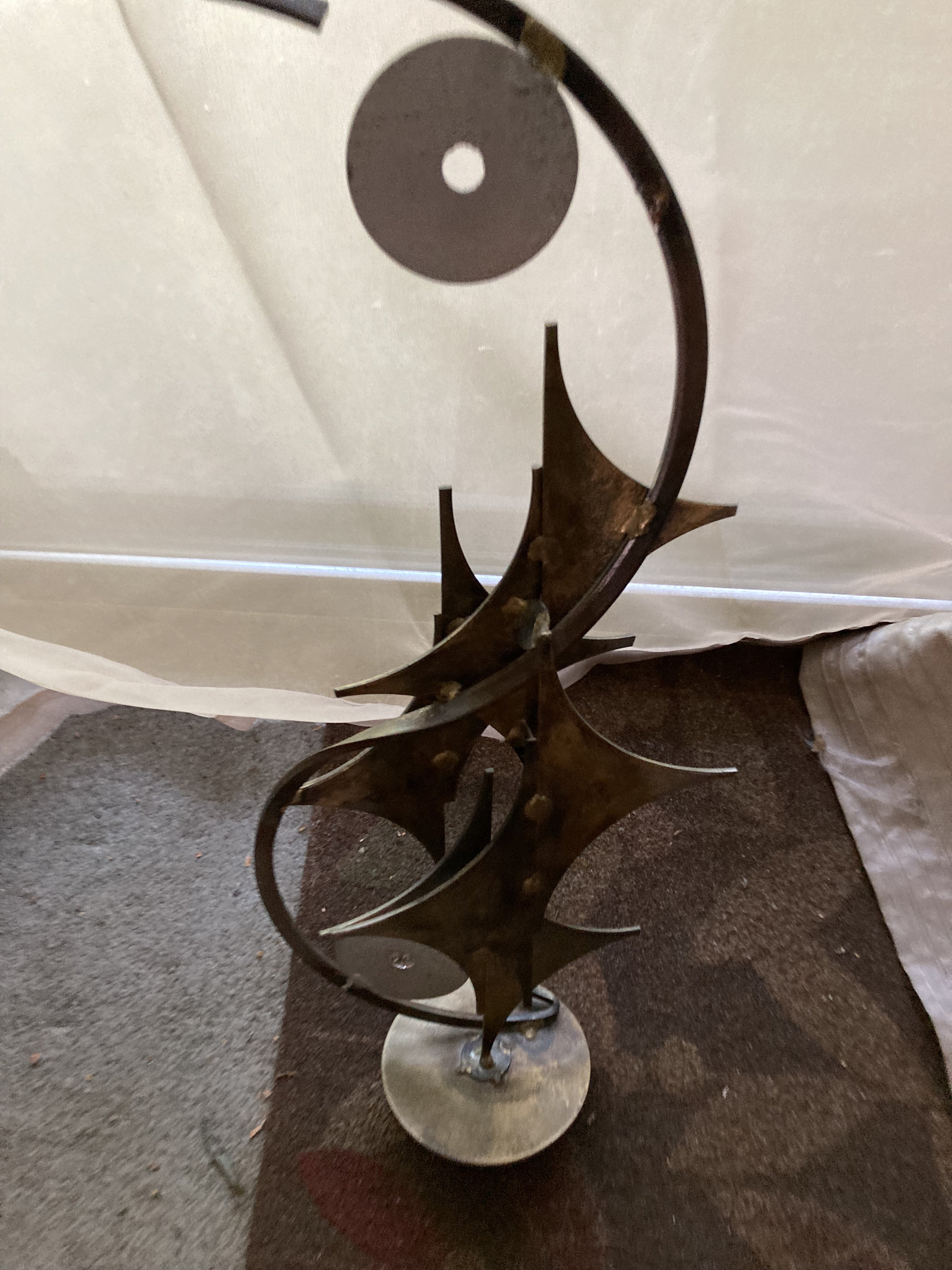
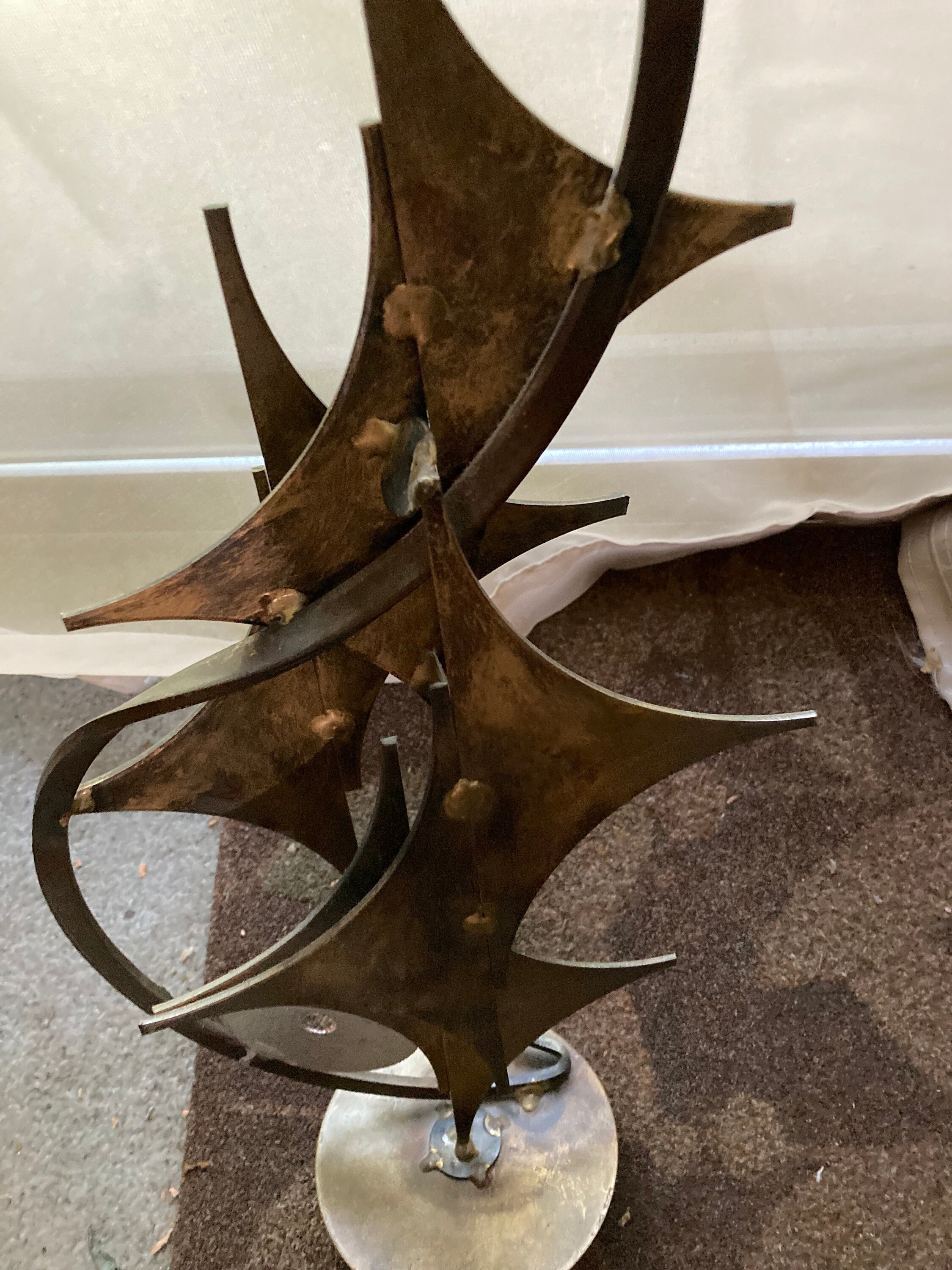
Handmade Modern Abstract , Brutalist Metal Sculpture
History of Brutalism
When it comes to attitude and commanding presence, brutalist design has it in spades.
Its primary gestation began in the 50‘s from the architectural movement known as New Brutalism,
which evolved from the use of concrete as a building material to create monumental statements adapted from modernist ideals.
Raw concrete in French is “béton-brut”, which was a source of the name. Its use in architecture and sculpture added a confrontational rawness to it, which influenced the evolution and style of brutalist movement in the 60‘s and 70‘s. Brutalist art drew inspiration from the likes of Le Corbusier’s architecture to the sculptures by Alexander Archipenko, Constantin Brancusi and Alberto Giacometti. With sculpture, conflicting asymmetrical geometries merged with mayhem and menace, usually constructed from raw forms of metal and clay, to essentially define the brutalist aesthetic. It went on a tangent to the Mid Century modernism where you had artists like Paul Evans creating audacious, brash, heavily textured furniture with pure abandon. Brutalist architecture was quite often represented with repetitive angular geometries to a massive scale. It also was reactionary in the sense that the early Brutalism architects found the streamlined modernist designs too symmetrical and neat and wanted to introduce more abstract and unpredictable shapes to their brutalist buildings.
The radical brutalist art had an element of risk to it and pushed the boundaries of abstract expressionism in modernist art. Rather than being easy on the eye it is more antagonistic and even hostile, and a challenge for interior designers to integrate into any location. But for giving life into an inert environment, a brutalist piece is synonymous with edgy dynamics and primal honesty.
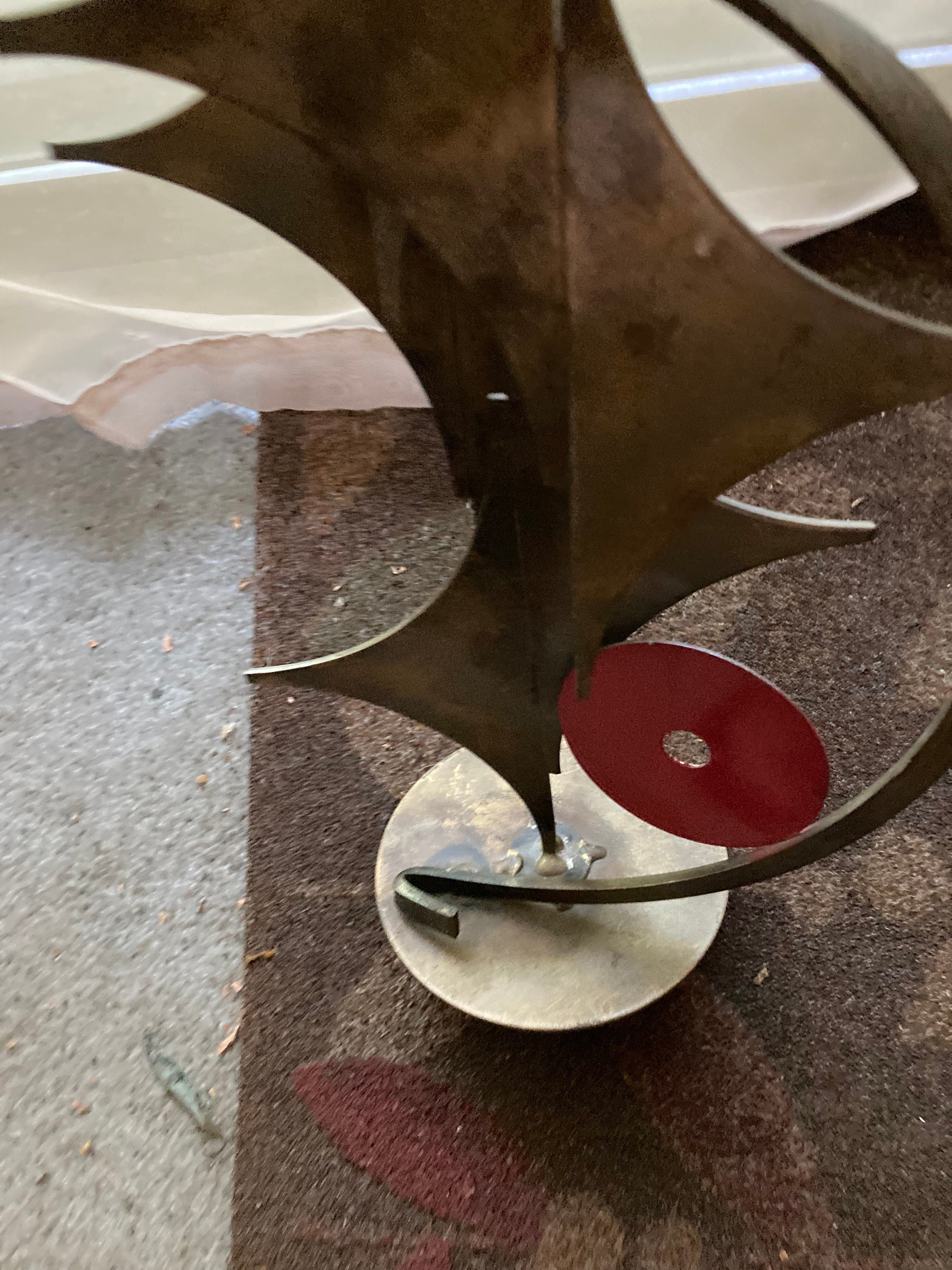
There is no mark as who made this sculpture,
As per previous owner in Estate Sale, it was purchased in late 70's
Dimentions:
22" tall
8 " wide
4.75" deep
Weights 3.5 lbs