

- Accepts Etsy gift cards
$160.65 $189.00
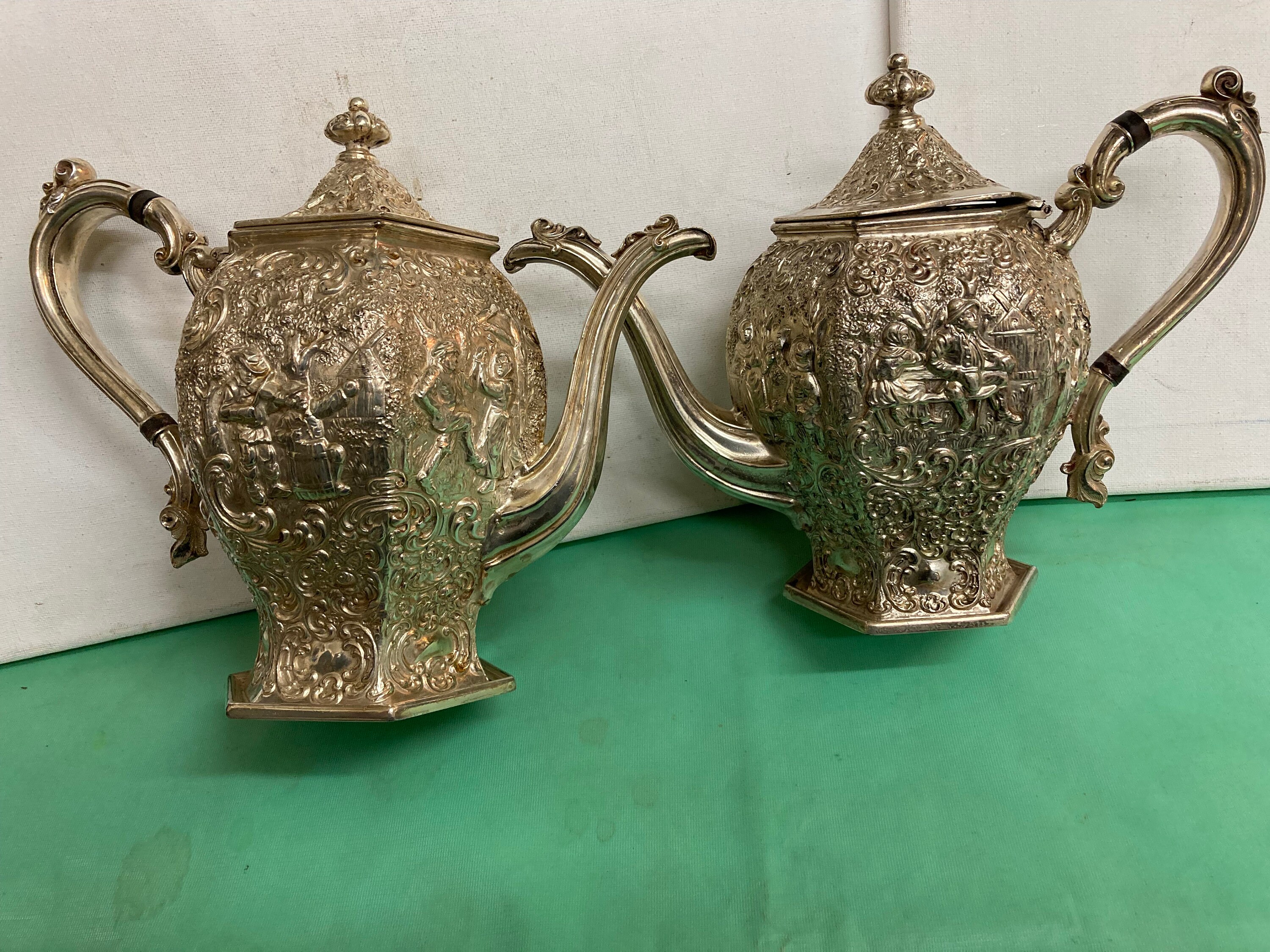
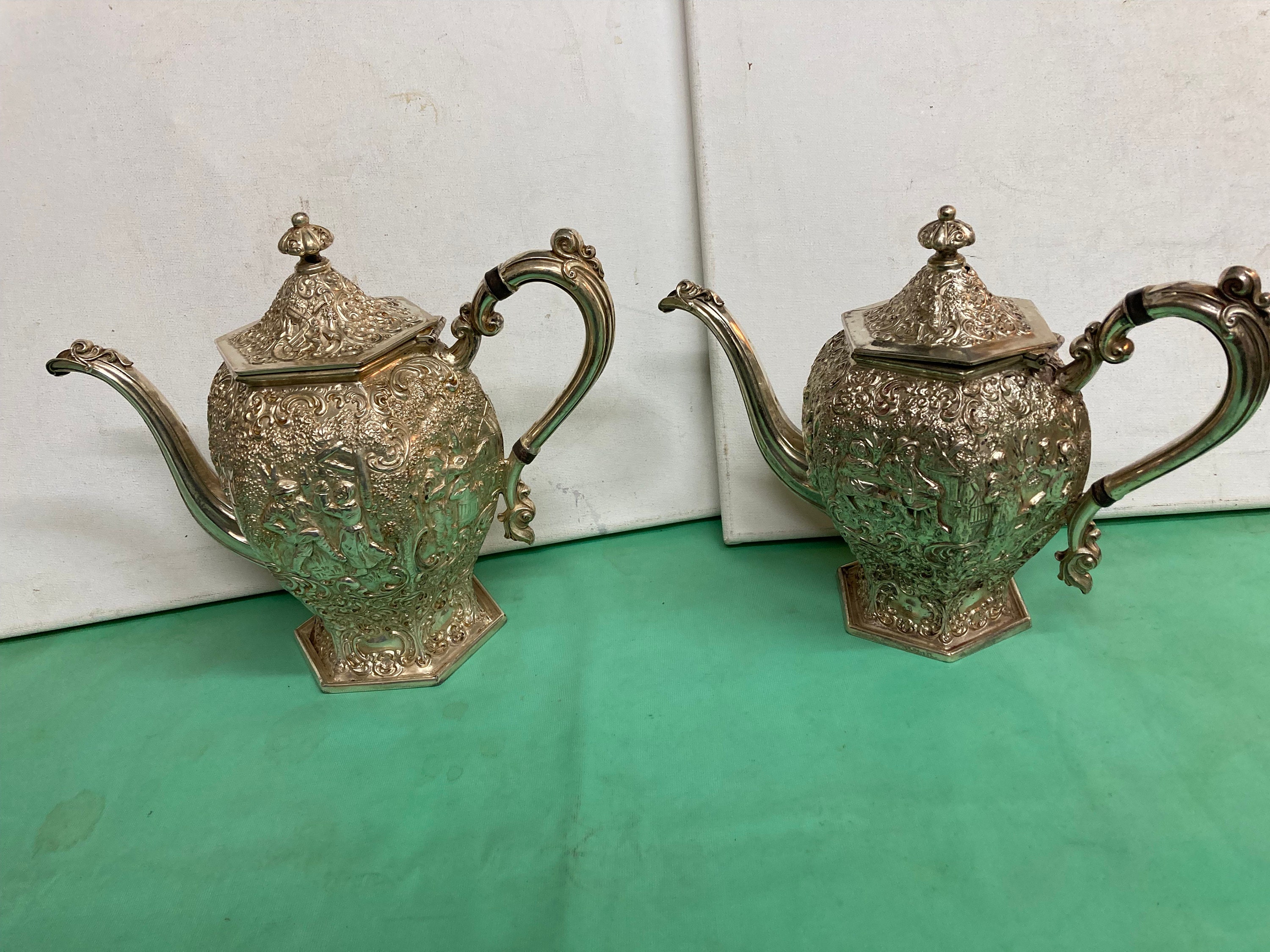
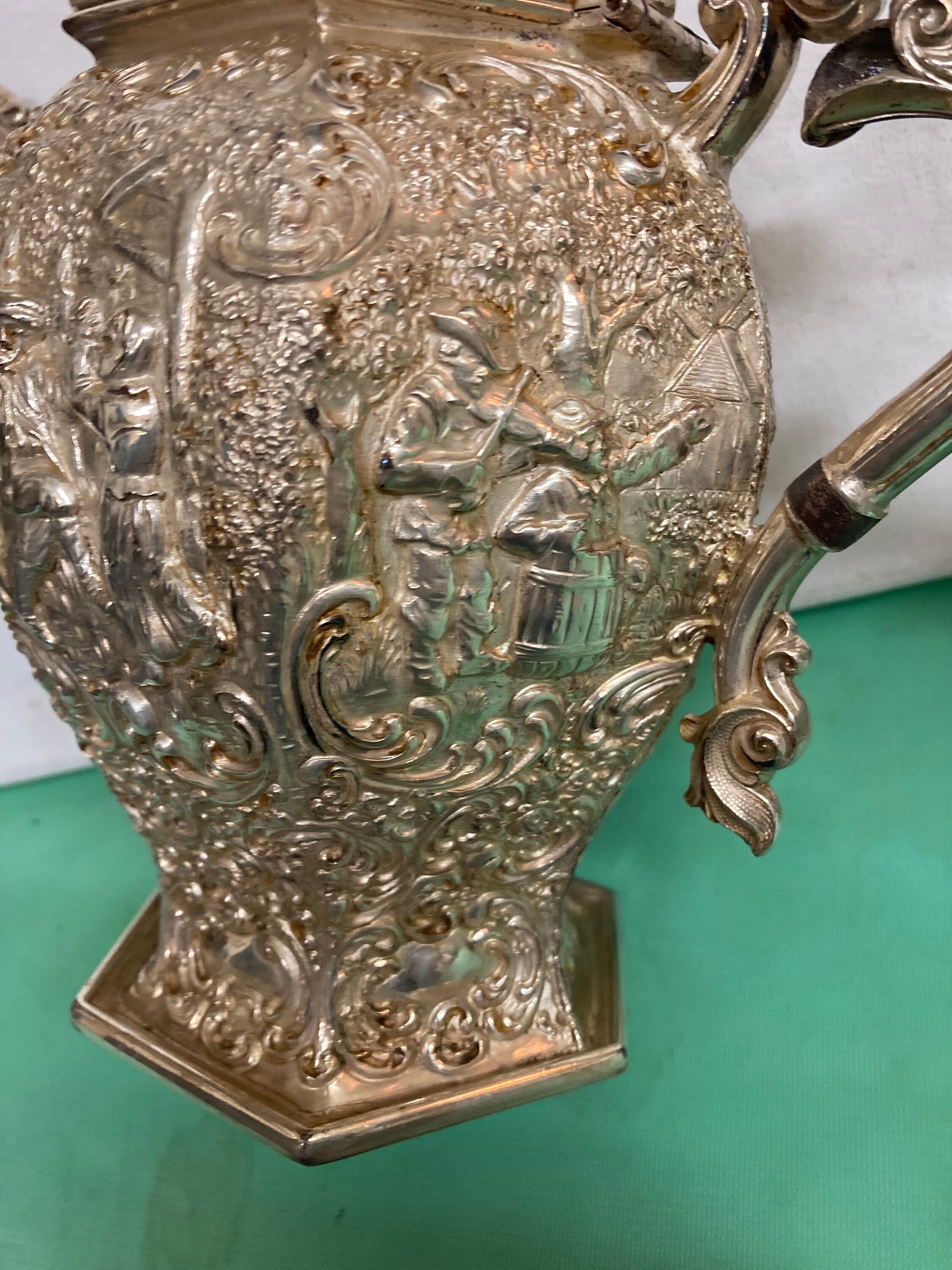
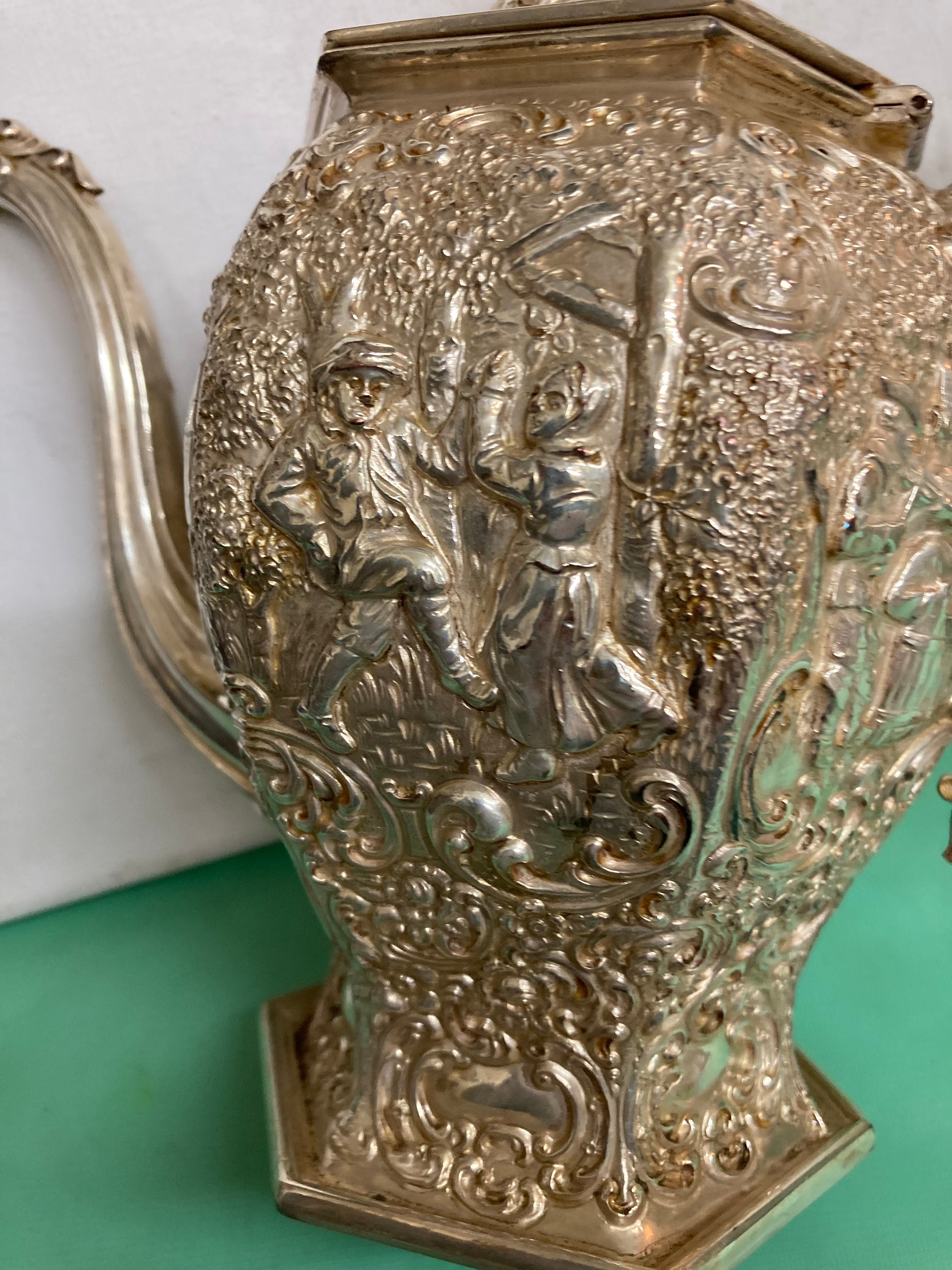
Two Figurative Windmill Dutch Inspired Silver Teapots
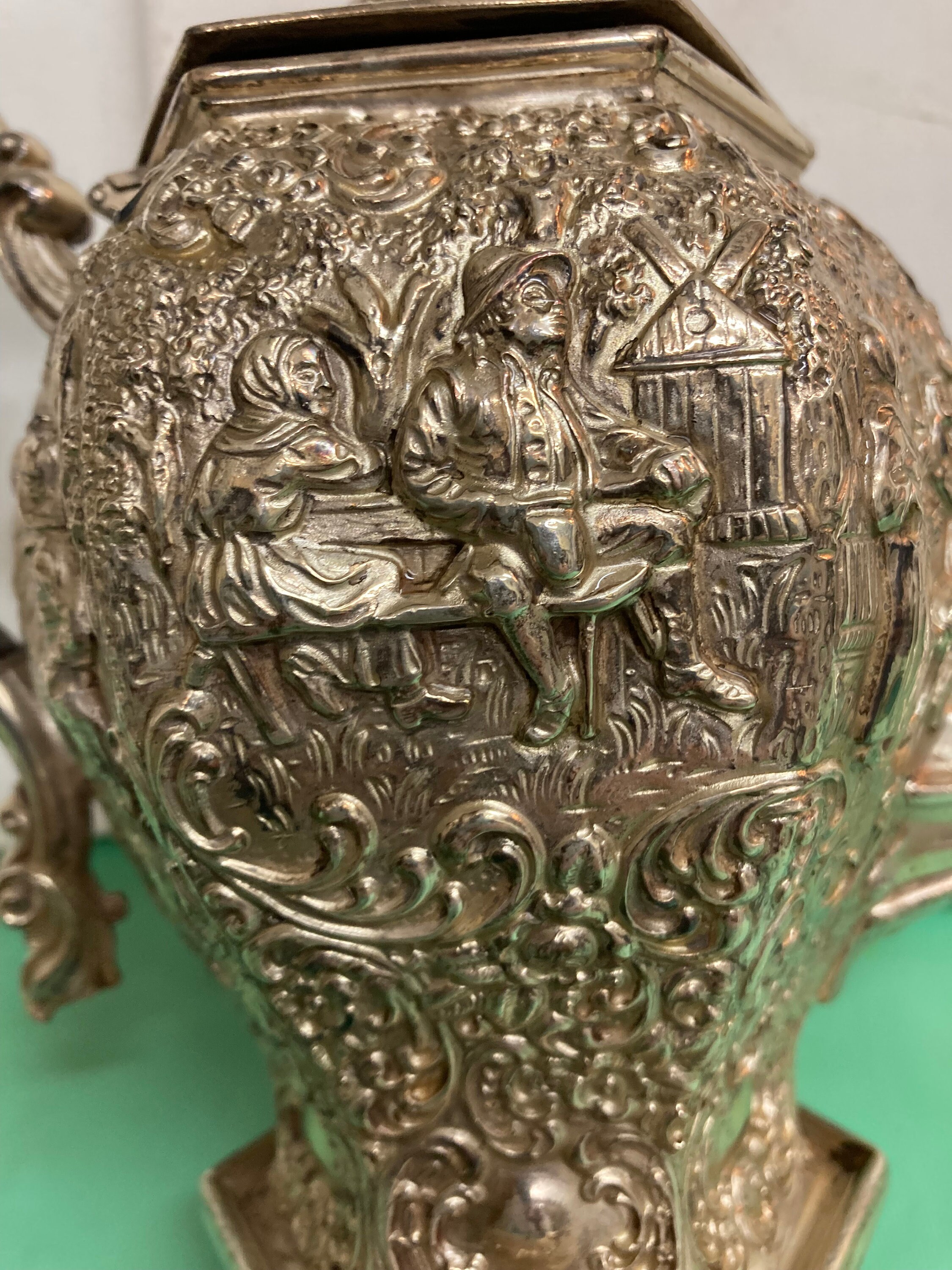
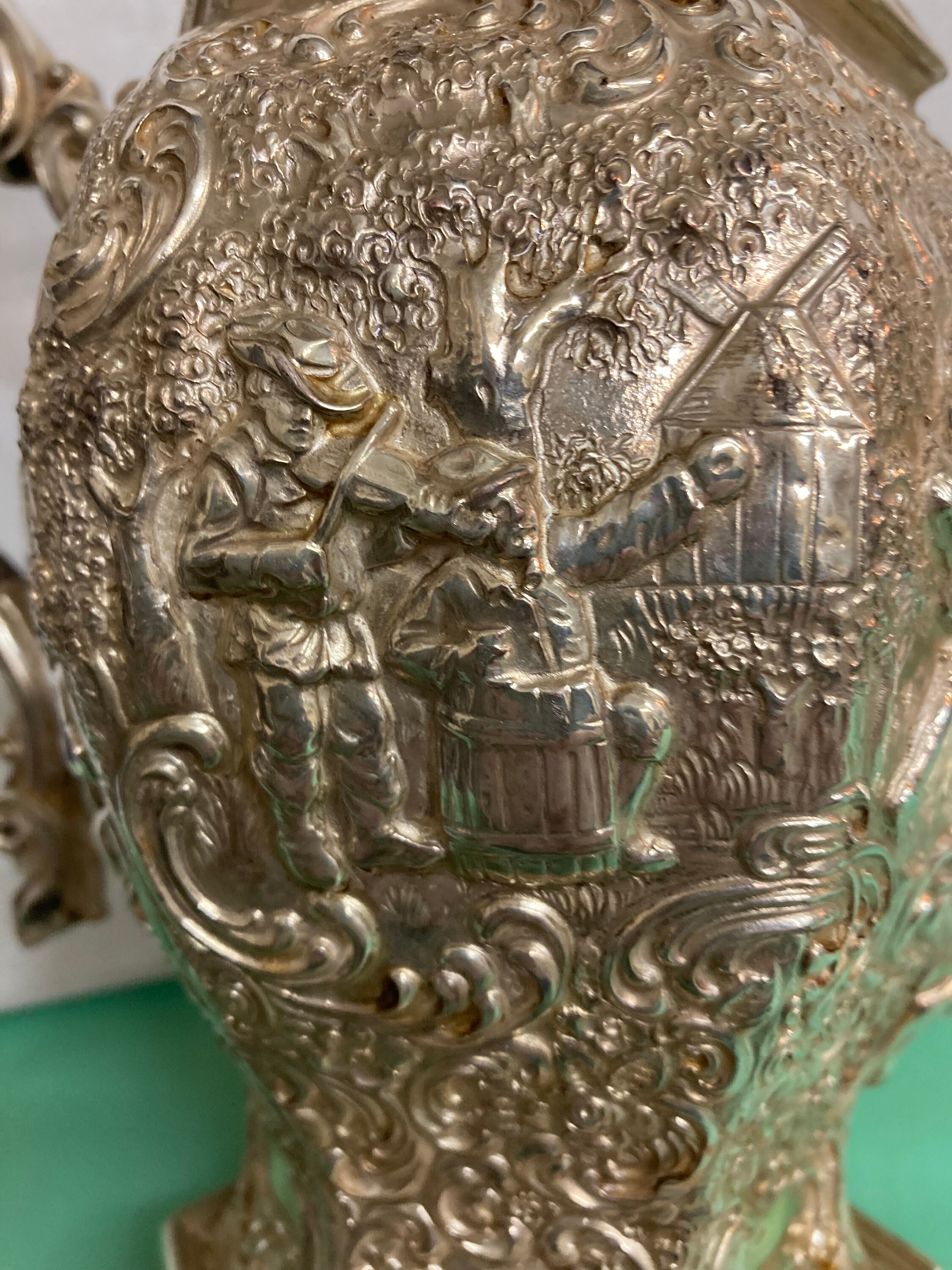
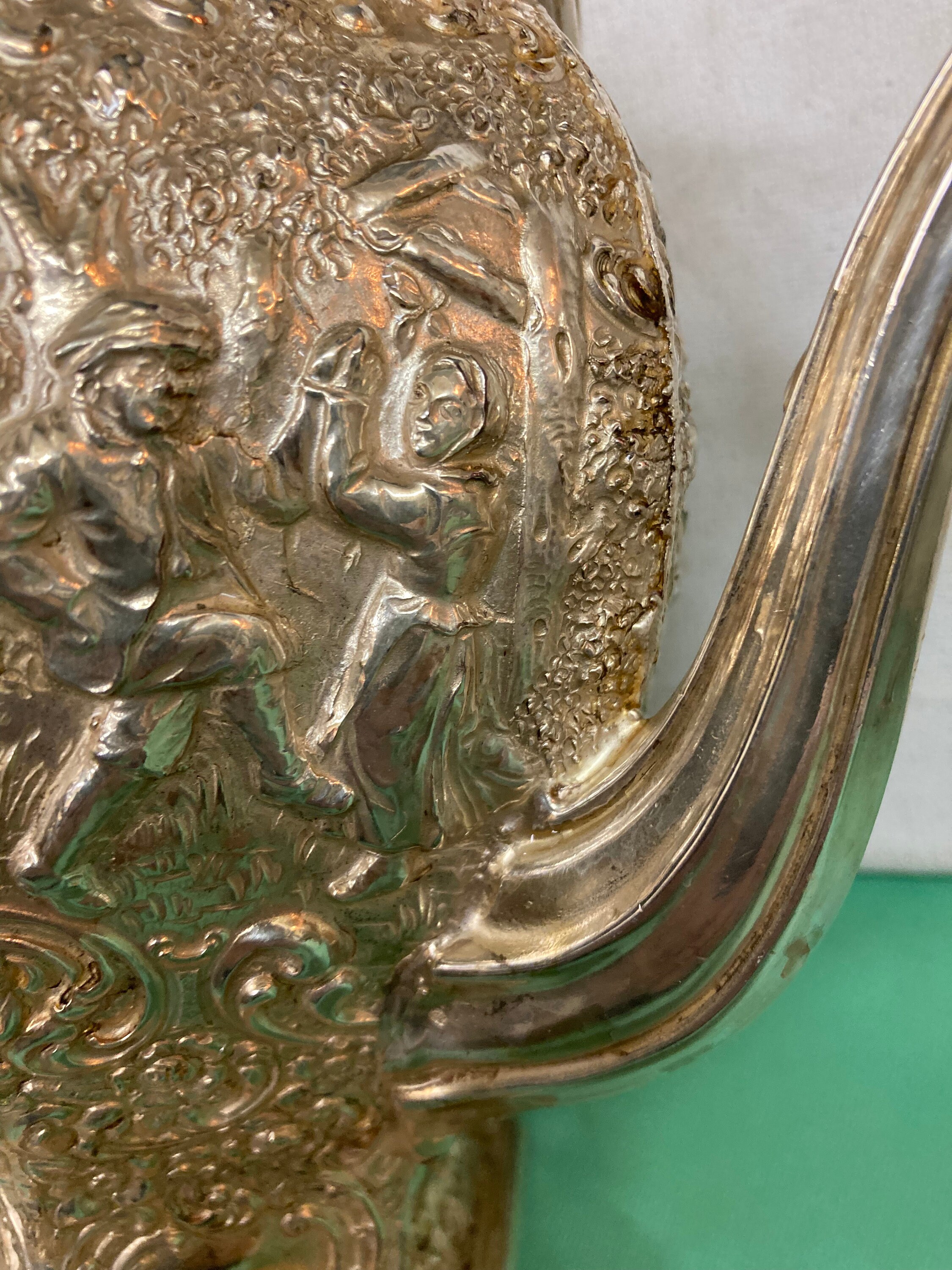
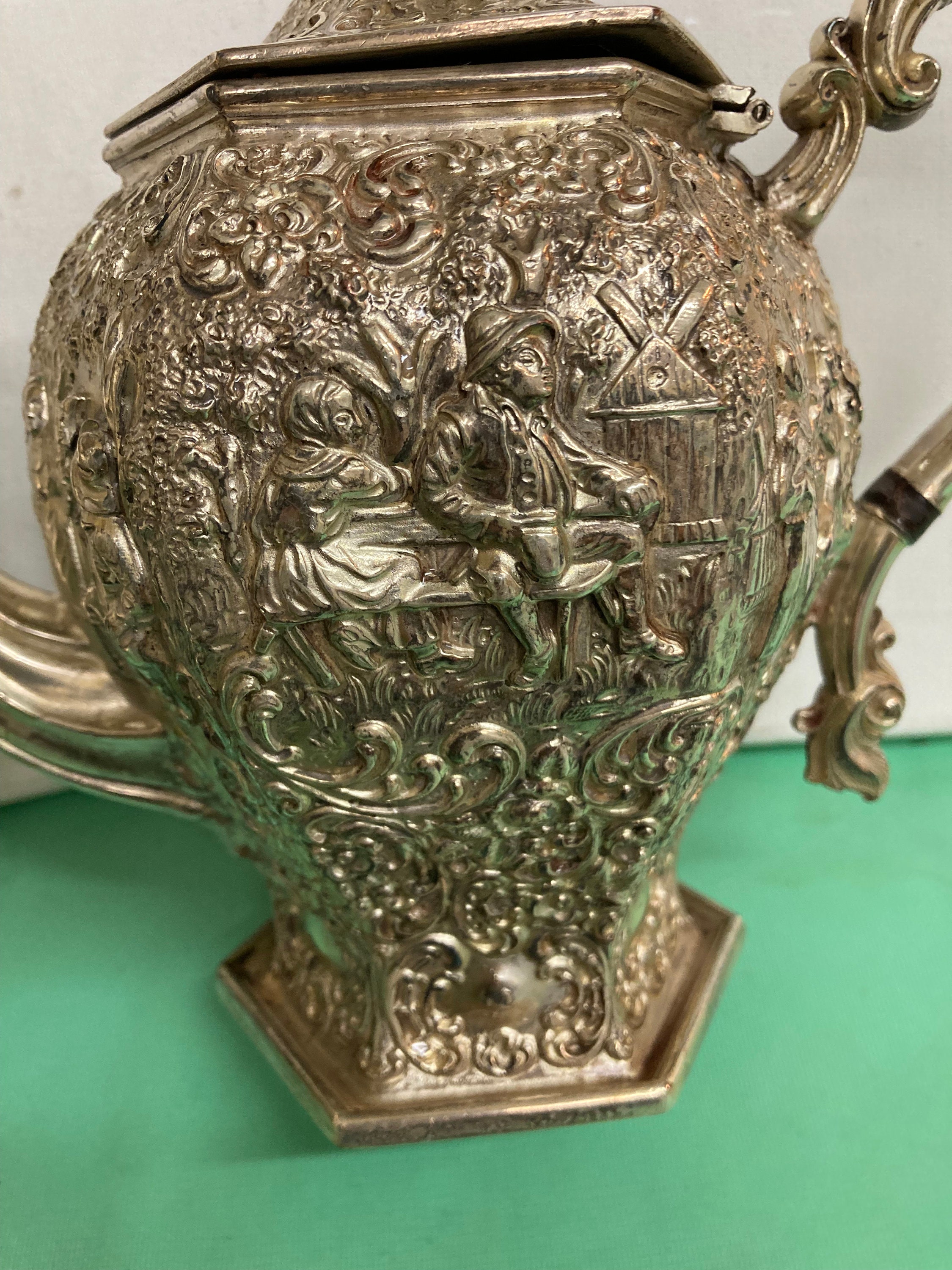
These attractive silver teapots have incredible chasing, raised figures, Dutch inspired, teapot,
intricate flowers, with engraving Hallmarks, crown & pipes symbols, numbered 3175.
Both have remarkable workmanship,
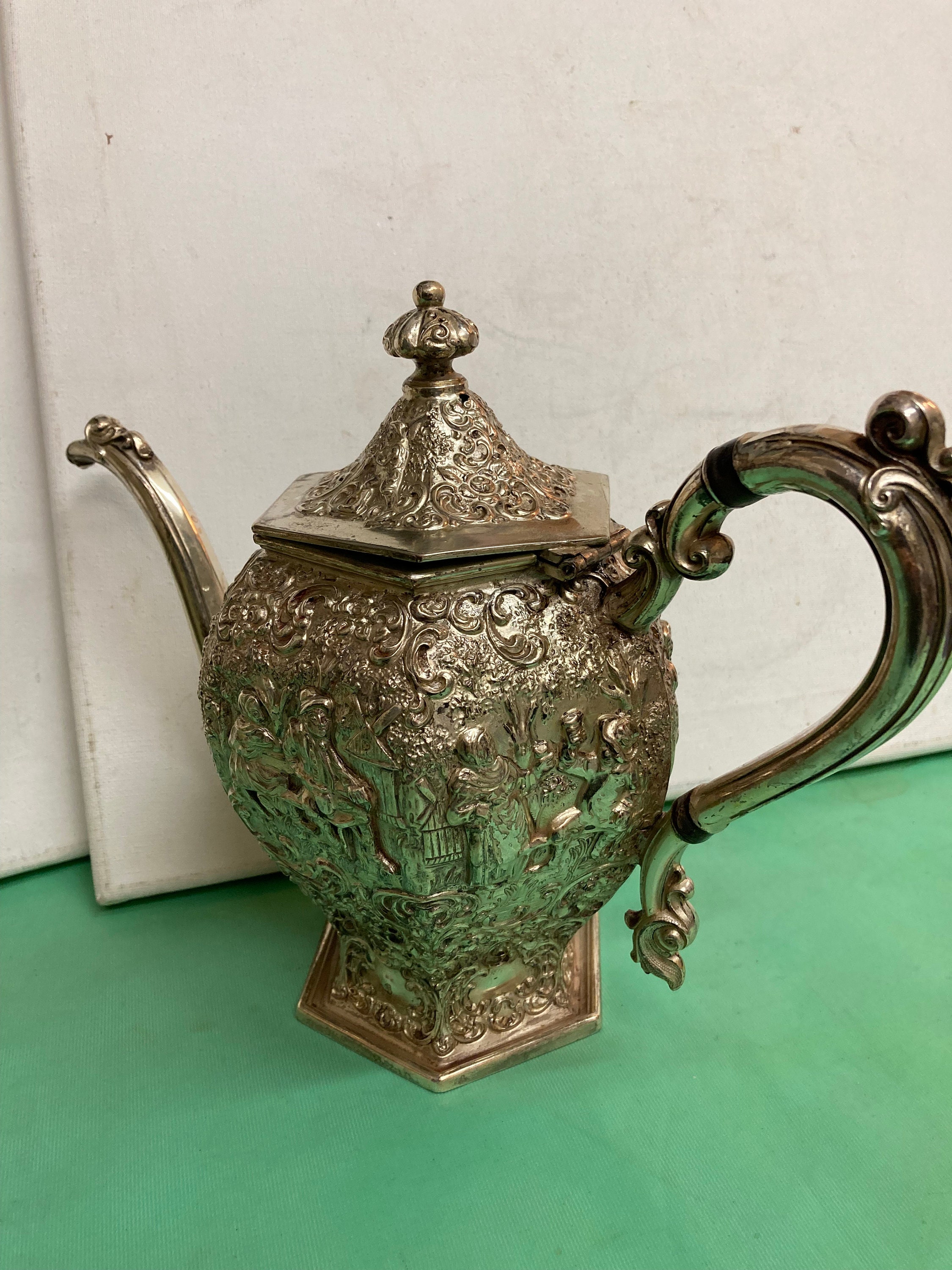
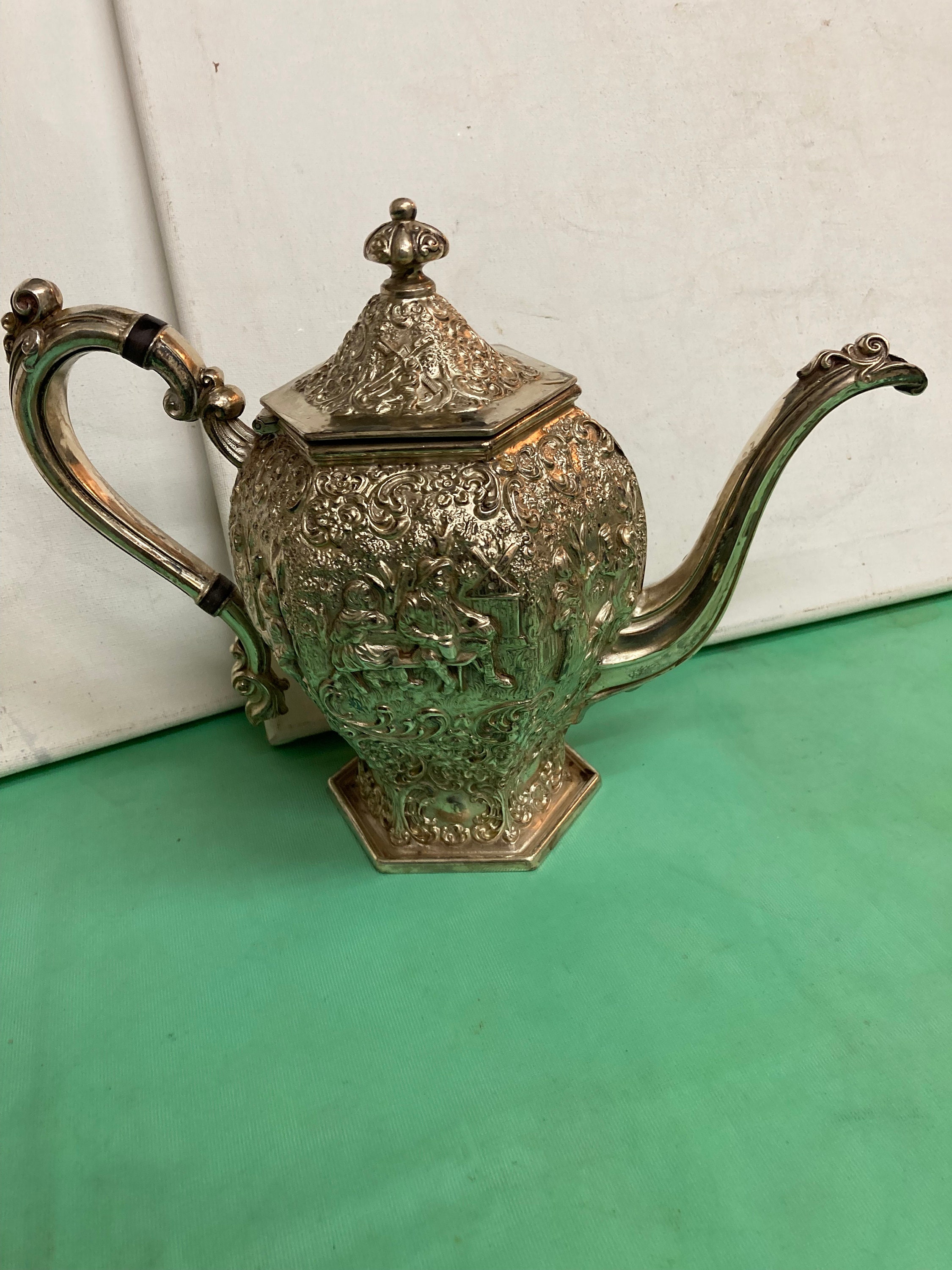
Dutch metal silver tone teapot, raised figurative intricate chasing, floral, with Hallmarks. Engraving symbols of crown & pipes, with number noted : 3175 Incredible workmanship, Windmill lid and handle. aged, very good, without cut or visible imperfection
1)
Measures 9 " h, 10" w. Windmill lid and handle. aged, very good, almost excellent. Story telling village life.
2)
Measures 7.5 " h, 10" w. Windmill lid and handle. aged, very good, almost excellent. Story Telling Village life
TO purchase both please contact before
price is for ONE only
Silver plate teapots that were made by Barbour Silver Company. Samuel L. Barbour and his brother, Charles Barbour, founded their silver company in Hartford, Connecticut, in 1889. The number is the design number. The ornate pattern is repousse, a method of hammering a design from the reverse side of an object. Barbour Silver Company became part of International Silver Company in 1898.
Samuel and Charles Barbour partnered to form the company Barbour Brothers Co. in 1881 or 1882, when Samuel arrived in New Haven, Connecticut, from Chicago. The brothers began their career in the industry by selling the silver-plated products of I. J. Steane & Co. of Hartford, Connecticut. By 1889, however, they were manufacturing their own wares out of their shop at 64 Market Street in downtown Hartford.
As a result of the merger of I. J. Steane & Co., Barbour Bros. Co., and Barbour Hobson Co., the Barbour Silver Co. was established in 1892—a little over a decade after the Barbour brothers first went into business together. From its Hartford location, this silversmithing firm created fine hollowware of both the silver-plated and sterling varieties. Its specialties were the production of engraved or chased pieces, the bases thereof being nickel silver. Between 1921 and 1931, Barbour crafted a large number of “Dutch” silver-plated copper products. So well-known for its plated pieces was Barbour that it incorporated the phrase “quadruple plate” into several of its maker’s marks.
Barbour Silver Co., in 1921, was relocated to the factory belonging to Wilcox & Evertsen. Meriden Britannia Co. had acquired the latter in 1896, which was headquartered in Meriden, Connecticut, and, in 1898, Meriden Britannia Co. had been absorbed into the International Silver Company. Thus, through Wilcox & Evertsen, Barbour was incorporated into this growing amalgam as well. It was one of the first firms to make this transition.
1931 was the year the Wilcox & Evertsen plant closed, and with it went Barbour Silver Co., whose trademark after that became inactive.